Hummingbirds are back!

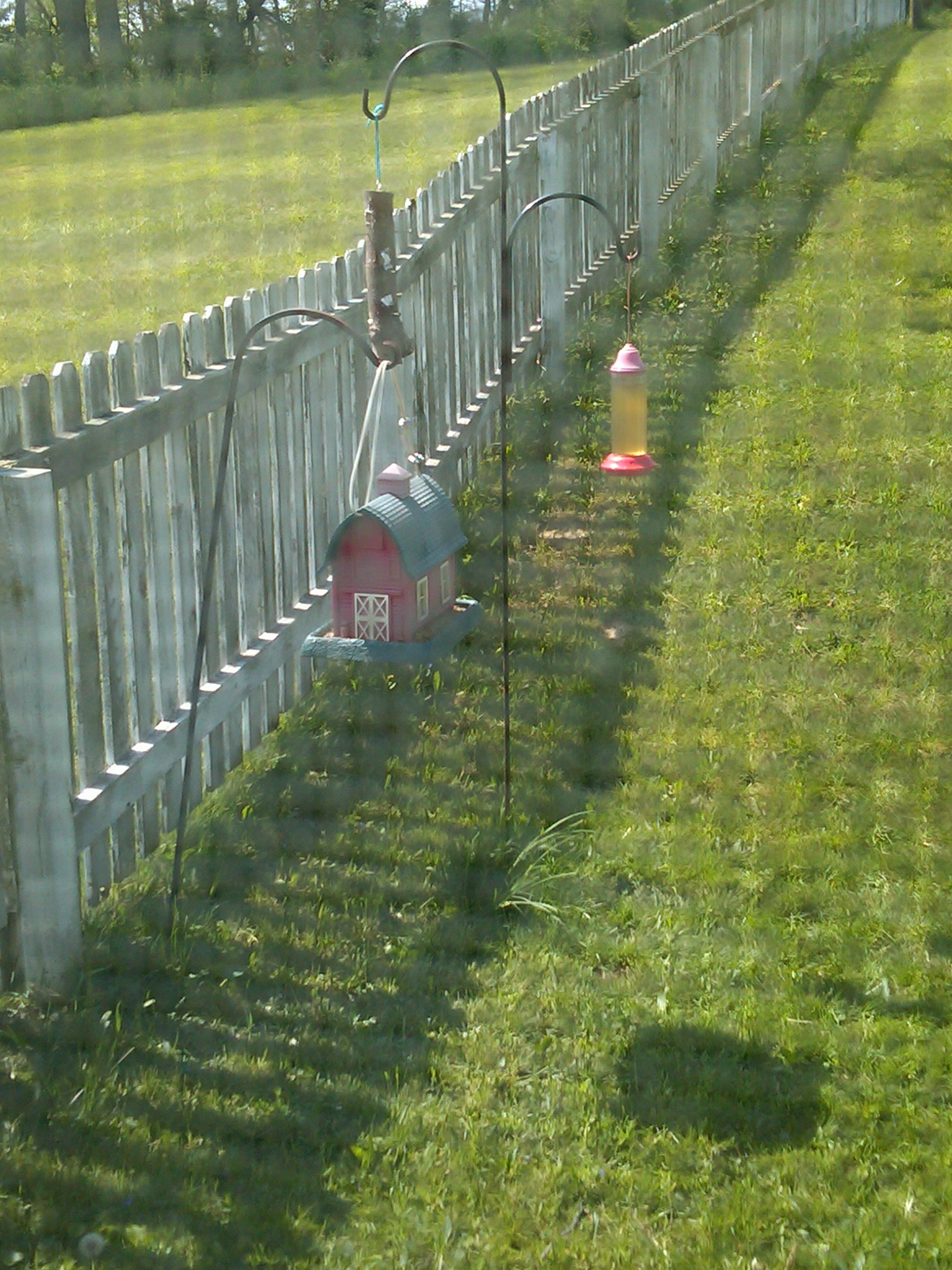
We noticed a hummingbird outside our dining room window on May 1st.  We normally have a nectar feeder out there, but didn’t have it out yet.  So, we whipped up a batch of nectar this week, and hung up the feeder.  🙂

Here’s what we do to fill a feeder our size:

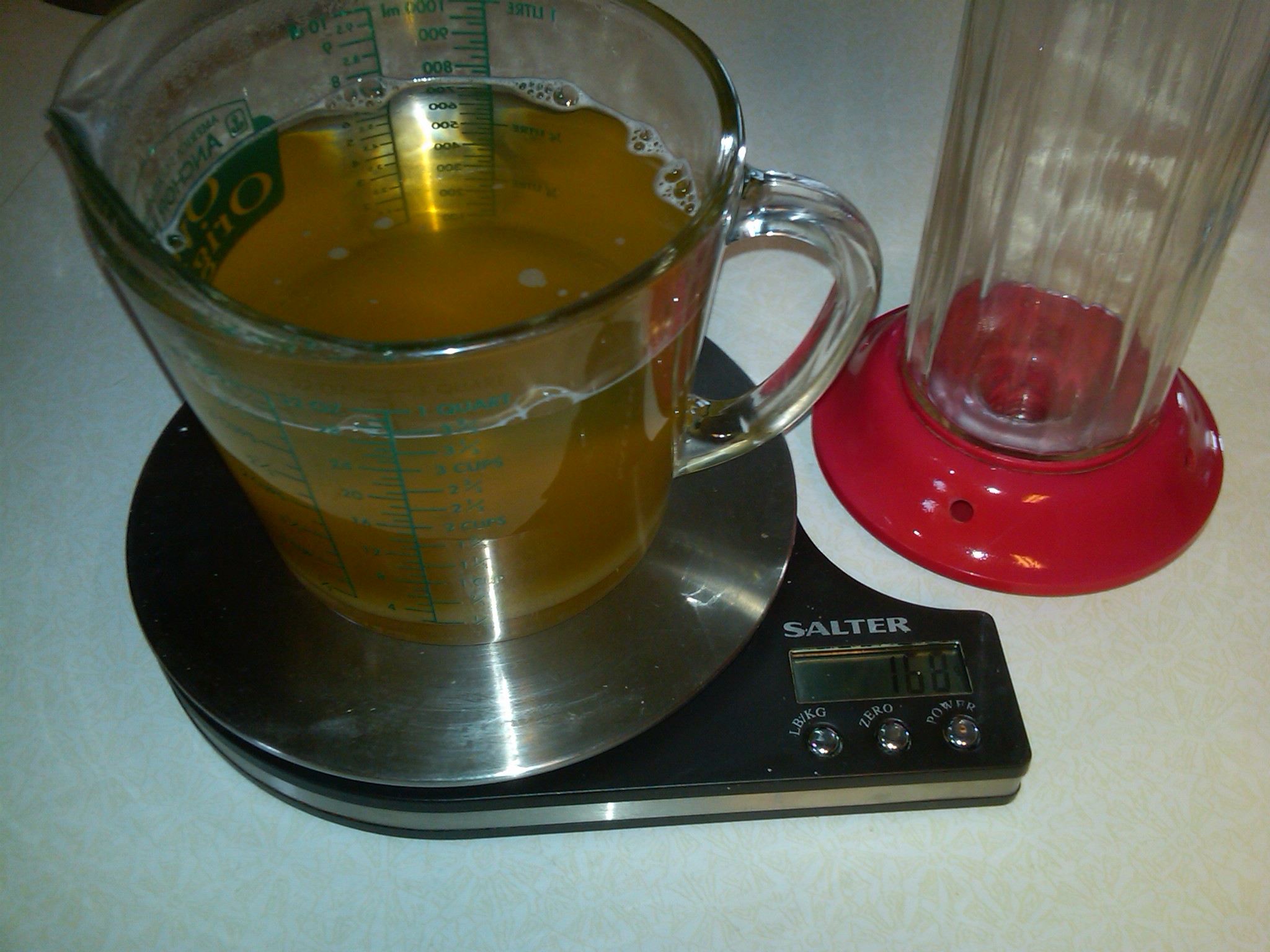
Boil 3 cups water & pour into glass measuring pitcher.

Add 168 grams or 3/4 cup organic, evaporated cane juice (since we don’t buy white sugar anymore, the birds get what we get…).

Mix until dissolved, cool, add to feeder.

It usually takes “our” hummingbirds about one week to polish this amount off. 🙂

Here’s a view from our dining room window.  A trio of bird seed, suet, and nectar!  🙂

mud boot – left foot – size 7 (men’s)

I love finding uses for items that can no longer be used for their intended purpose.  (Like old t-shirts into rags, light bulbs into crafts, etc…)

But, alas, I cannot find a use for a perfectly good left-footed mud boot…

We all have a pair of these boots, and they are an important staple of farm-chore life.  They keep our feet dry & mud-free because they are tall & easily sprayed off.

After months of wear, I ALWAYS get a hole in my right boot where my foot bends.  Oh, I keep wearing my boots, hole & all, for as long as I can.  But once I feel like I’m walking on a sponge, if we have the funds, I get a new pair.  This always leaves me in a bit of a dilemma, though, because I hate to throw out a perfectly good left-footed boot!

So, I welcome any ideas for a men’s, left-footed, size 7 (women’s size 9) mud boot…

Or it sure would be fun to find someone with the same issue on the other foot –  we could do a mud boot swap, lol! 🙂

Redeeming the “nooks & crannies”

Michael asked me what was wrong the other morning, as I was a bit frazzled & cranky.  Both boys were eating breakfast, but stopped to look at me for my answer.  I started to explain how there are just so many “things” we’re trying to get done right now, but some days it seems like you’re going backwards.  Everything seems to depend on something else to be done FIRST.  I sometimes struggle with where to begin, and in my uncertainty, I allow my circumstances to determine my attitude.

Both boys listened to my ramble & acted as though they understood… Then Michael said he was amazed at all the “nooks & crannies” there were… I smiled.  He WAS listening! 🙂

Made me reflect on my daily prayers.  I KNOW that the Lord is in control.  I KNOW that since I am one of His children, I am on the side of Victory in the end.  I KNOW the words to pray for His Strength to get me through this day, and I KNOW the words to pray at the end of the day to thank Him for helping me throughout the day… SO, why is it, I allow Satan to win in the “nooks & crannies”??   Well, I know the answer to that, too:  Because “we live in the shadow of ‘the fall’.”

Father, I thank you for pointing out that You don’t just want to help me with the overall picture – You care about even the most mundane tasks.  Clarity will come if I allow Your Peace to roadblock Satan’s traps.  Seep into all my “nooks and crannies”, Lord.  May I allow You to help me be victorious in all the little battles throughout my day, and may I remember this lesson, fresh each day.  Amen. 🙂

One of my favorite music groups is Selah.  They sing a song called “Unredeemed”, that I absolutely love, and have on my playlist.  One of my favorite lines is, “We live in the shadow of the fall.  But the cross says these are all:  Places, where grace is, soon to be… so amazing…”  Just thought I’d share the rest of the words.  🙂

The cruelest world
The coldest heart
The deepest wound
The endless dark
The lonely ache
The burning tears
The bitter nights
The wasted years

Life breaks and falls apart
But we know these are
Places where grace is soon to be so amazing
It may be unfulfilled
It may be unrestored
But when anything that’s shattered is laid before the Lord
Just watch and see
It will not be unredeemed

For every choice that led to shame
And all the love that never came
For every vow that someone broke
And every lie that gave up hope
We live in the shadow of the fall
But the cross says these are all
Places where grace is soon to be so amazing
It may be unfulfilled
It may be unrestored
But when anything that’s shattered is laid before the Lord
Just watch and see
It will not be unredeemed

Places where grace is soon to be so amazing
It may be unfulfilled
It may be unrestored
But you never know the miracle the Father has in store
Just watch and see
It will not be
Just watch and see
It will not be unredeemed

Homemade Yogurt

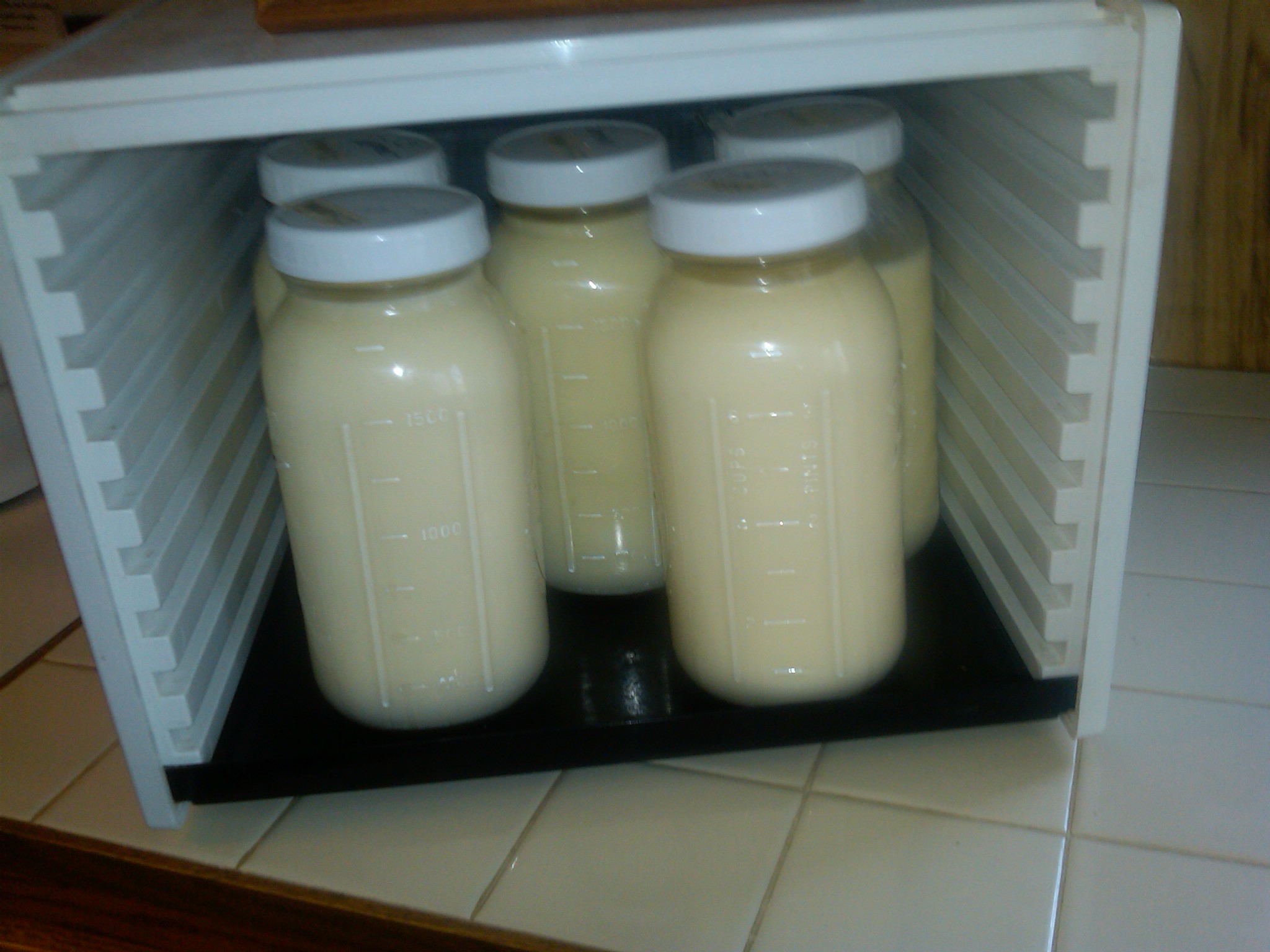
Made 3.25 gallons of yogurt this batch. 2.5 gallons were plain & 3 quarts were vanilla. Thought I’d share what we do… 🙂

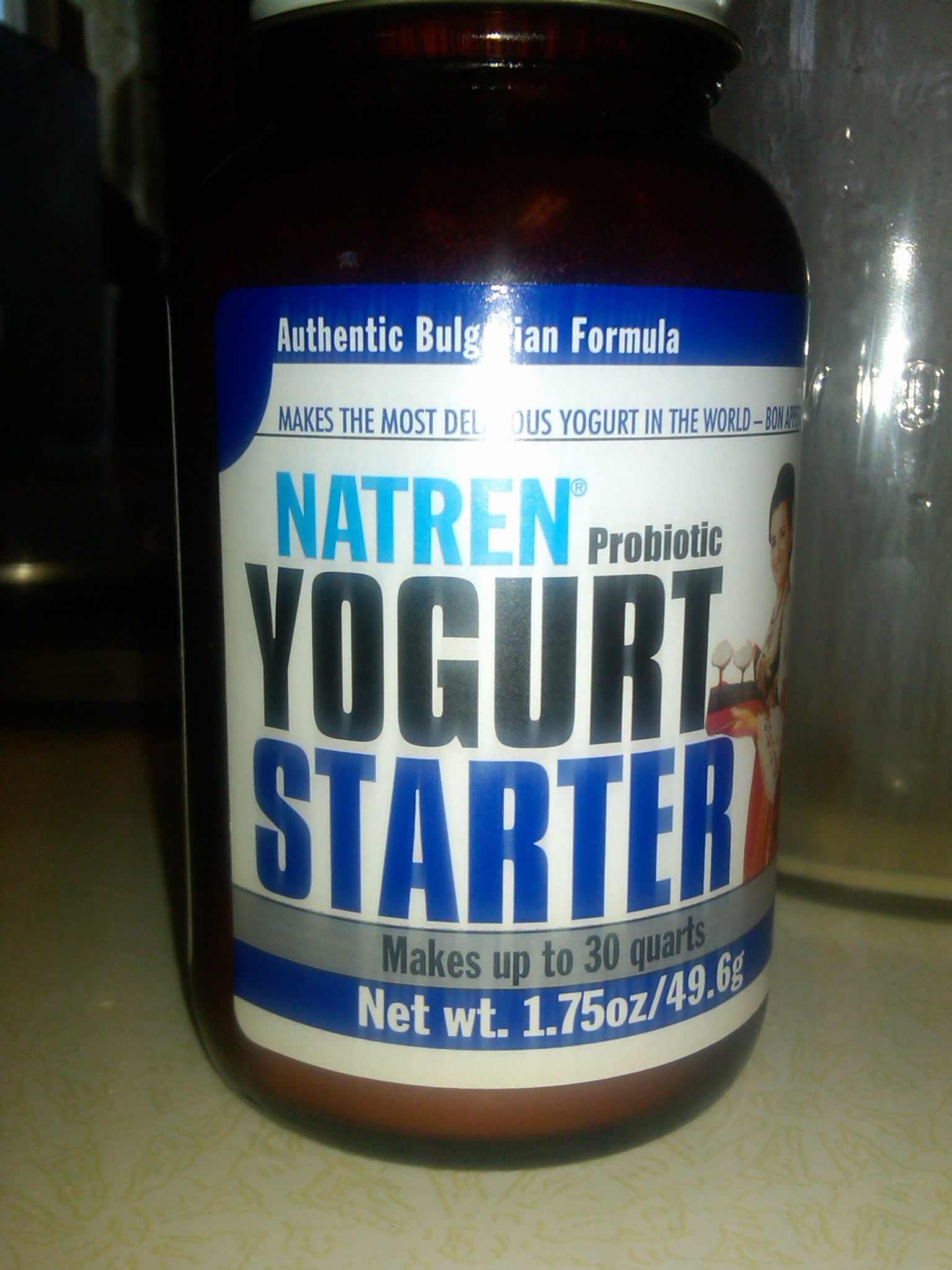
Our PREFERRED method of making yogurt is the “direct set” method. 1/2t of Natren yogurt starter per quart & whisk in 1 quart fresh milk.

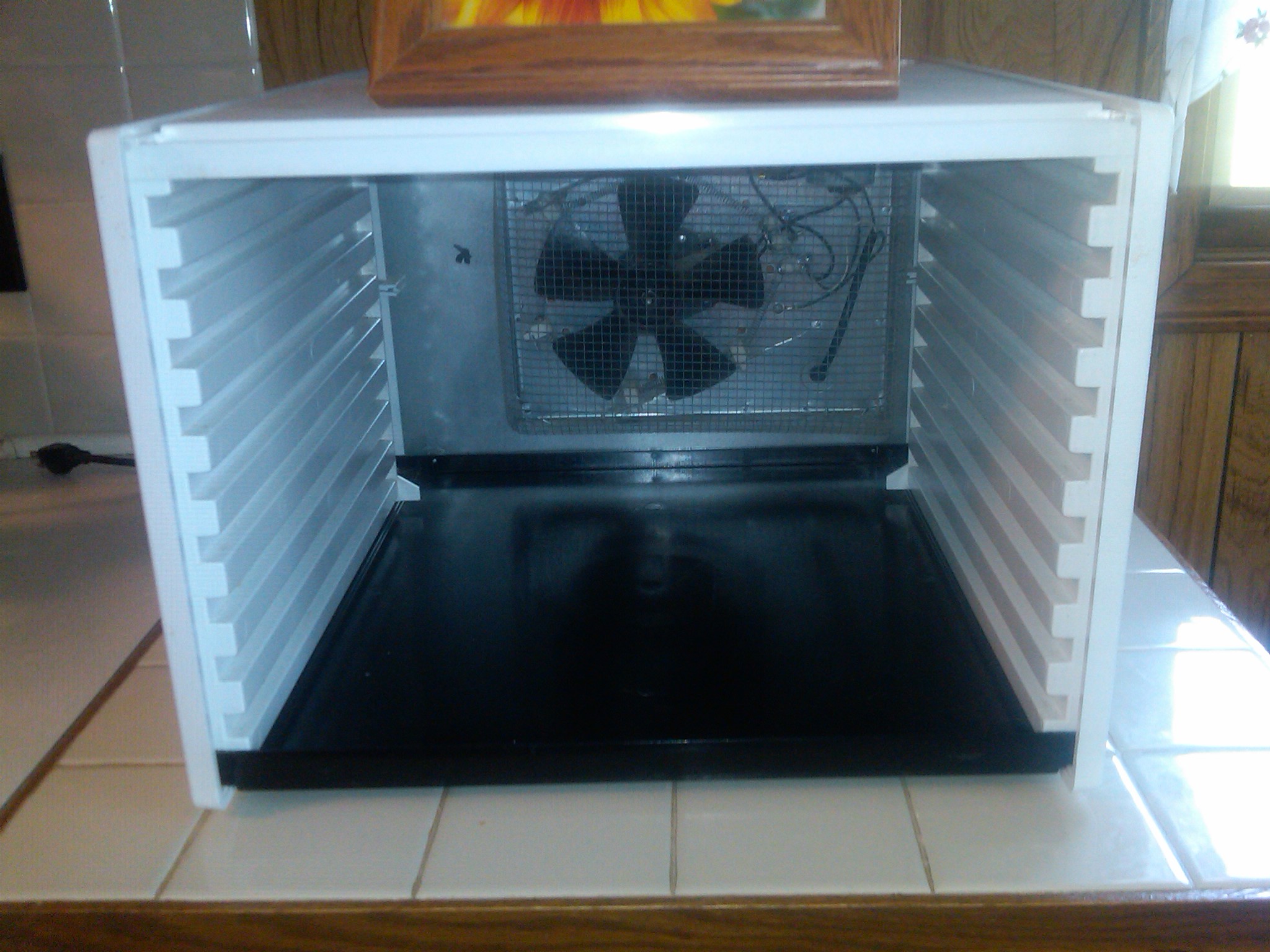
From there it goes directly into our dehydrator where it incubates at 101 degrees for 24 hours.  (If we want a flavored yogurt, we whisk it in right before we incubate it.)

HOWEVER, since Natren is kinda pricey, we cannot afford to make such large amounts of yogurt with this powder.  We’ve tried using plain yogurt from a previous batch as the starter for the new batch, but it wasn’t resulting in a consistent end product.  (It’s also not fun finding out after 24 hours that it didn’t work & we need to re-do…)

So, that all being said, here is how we normally make our yogurt:

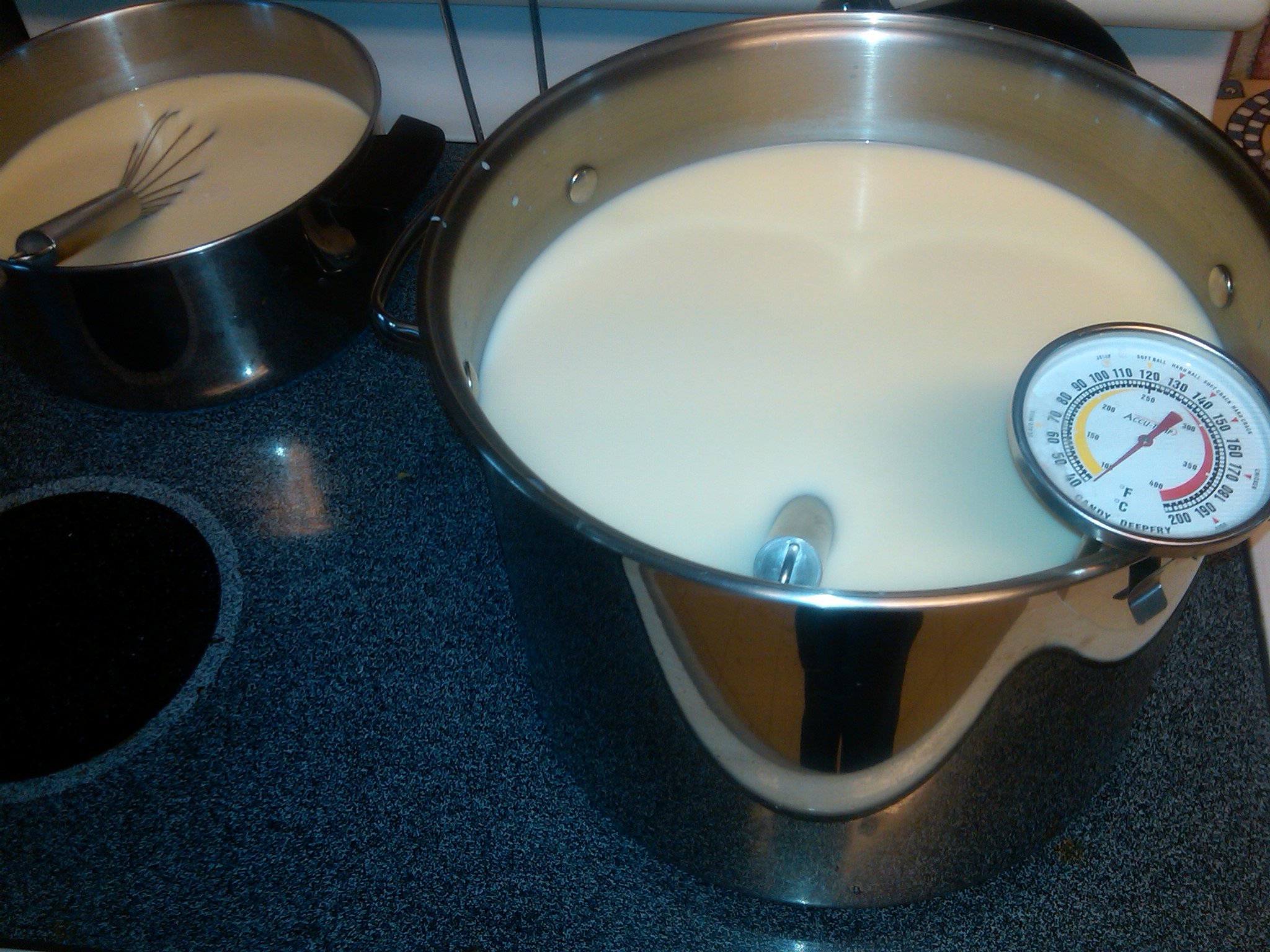
Heat milk to 180 degrees, whisking pretty steadily. Remove from heat.

If making plain yogurt, we cool milk to 110° either by allowing it to sit or by placing the pot in a sink of cold water.

Once it’s reached 110°, we whisk in 2T (overflowing, rounded T’s) of plain yogurt per quart.

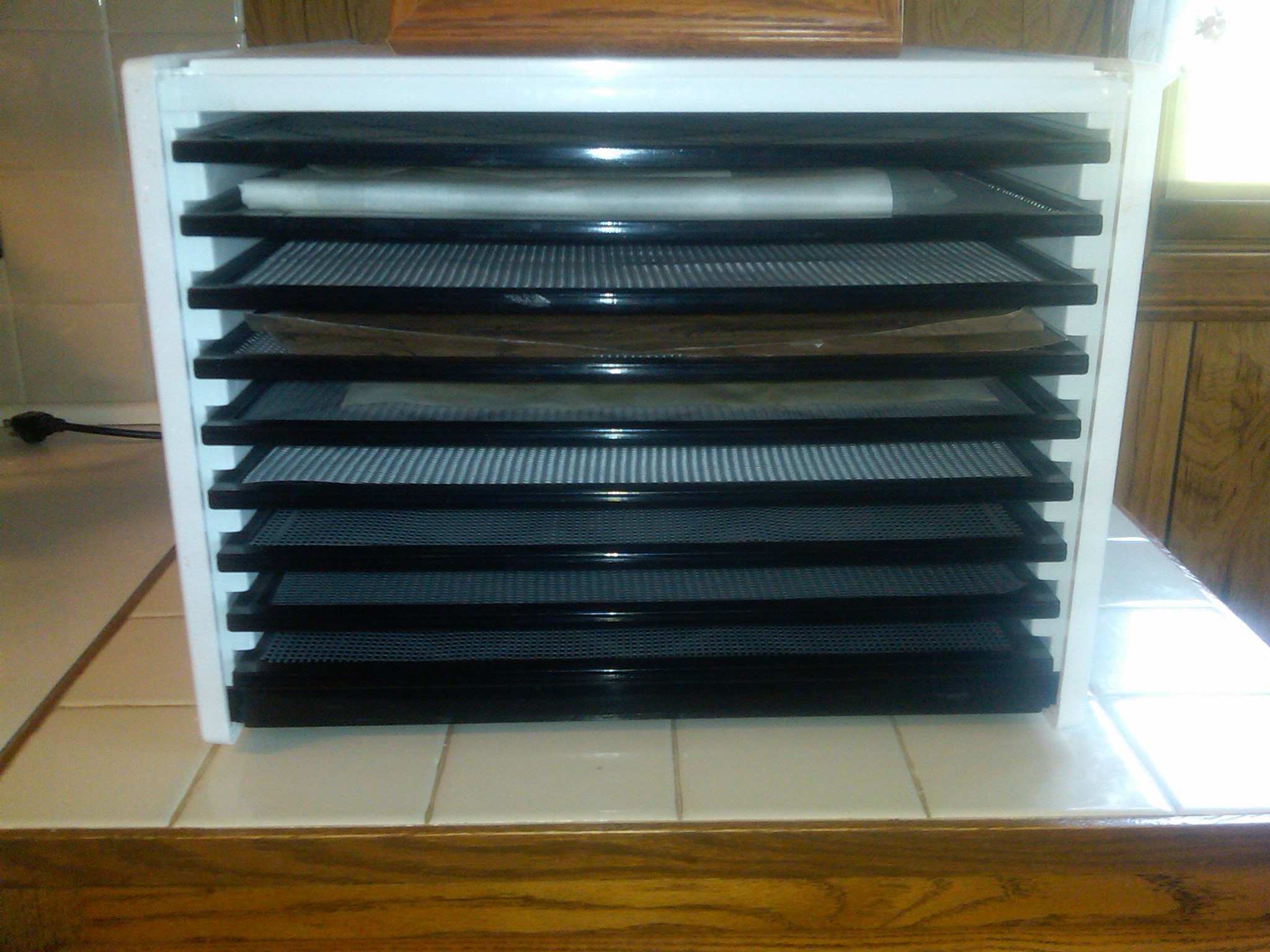
Incubate at 110° for 8 hours.  We have an Excalibur Dehydrator, and WE LOVE IT!! (future post, I’m sure…)

If making vanilla yogurt, we add 1T (homemade) vanilla & 1/4c sorghum or honey or maple syrup when the pot comes off the burner. (It mixes in best when it’s warmer.)

Cool & complete same as with plain.

**My normal routine for plain yogurt as a “starter” is:  one week I will make a quart of plain yogurt using 1/2t Natren powder.  The next week, I’ll use that quart of plain as my “starter” for what I’m making.  (Always being sure to make at least 1 quart of plain for my “starter” for the following week.)  For 4 weeks, I use the plain yogurt from the week before as my “starter”.  The 5th week, I make a new plain yogurt using the Natren powder.  This way, my “starter” has not lost its “oomph”, and I haven’t had any problems with my yogurt not setting.  (And this helps our Natren powder to stretch a lot longer, lol!)

If we find we have a build-up of plain yogurt in the fridge, we just drain it & make some cream cheese

Welcome – new bull, “Cleatus”

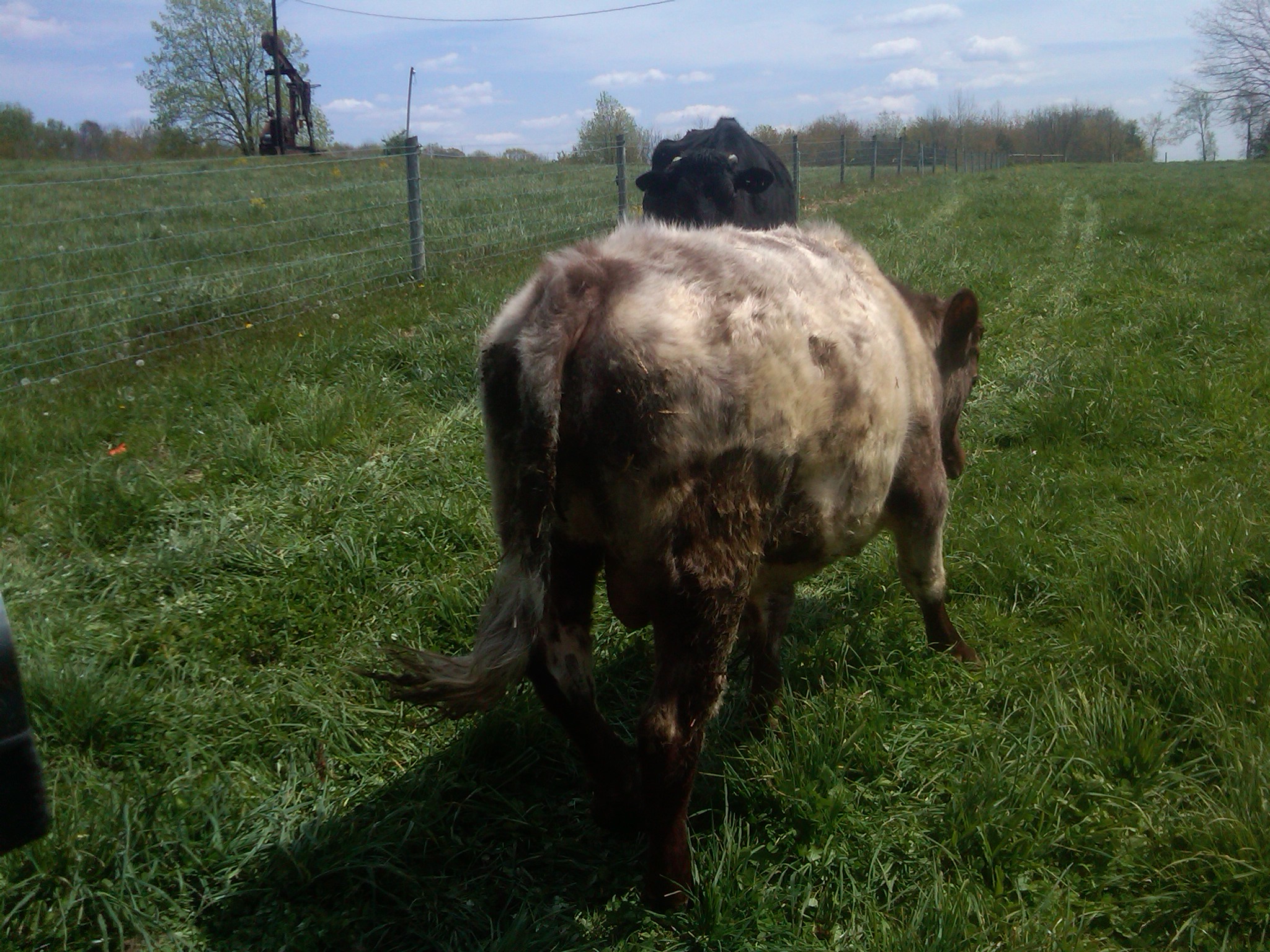
Mike & the boys went to pick up our new bull today. He is a registered shorthorn yearling. His coloring is very “chocolate marble looking” – should make some neat looking calves, lol… 🙂 Prayers for the fertility of our herd have begun!

Thanks so much to the Coy Family for allowing us to borrow their trailer. 🙂

Homemade Cottage Cheese

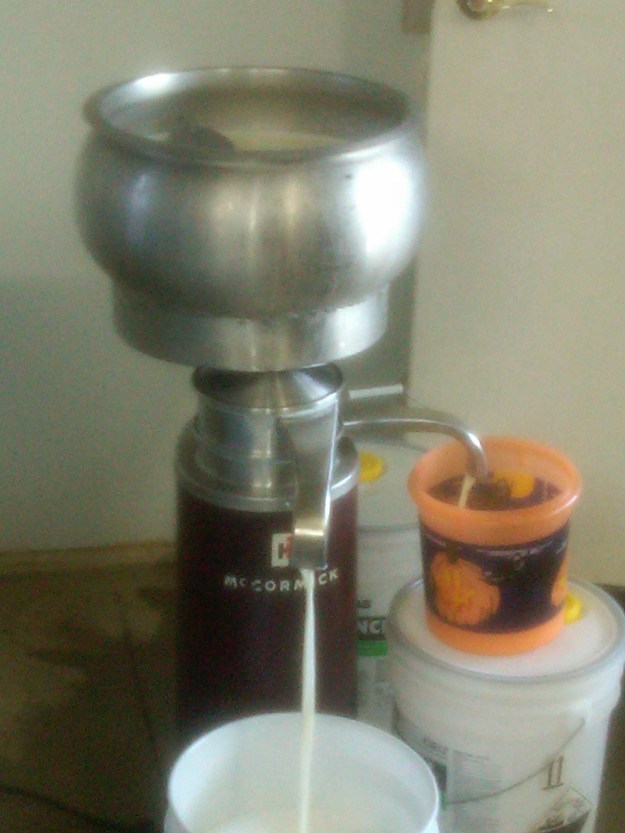
We make/use/eat a lot of cottage cheese.  In order to make butter, we separate the skim milk from the cream.  Here’s a pic of our cream separator.  It’s from the 1950’s, and we bought it off ebay several years ago.  You can see, we pour whole milk in the stainless steel bowl and then the cream comes out of one spicket & the skim comes out the other one.
**IMPORTANT NOTE**  We DO NOT advocate drinking skim milk.  Here’s a link to a past post containing Weston A. Price Foundation links explaining the reason we drink whole, raw milk.  That being said, since skim is a byproduct of the butter-making process, if there are foods we can make from skim to keep our tummies full, we are all for it.  Other uses for our skim milk are as fertilizer for our pastures, ricotta cheese, and for growing more kefir grains.

We fill our 5 gallon bucket up w/ about 3.5 gallons of skim, seal the lid on it, and let it sit for several days in our cool basement.  This is to allow it to “sour” and form a solid curd.  This can be anywhere from 2-6 days…depending on the temperature/humidity of the weather.
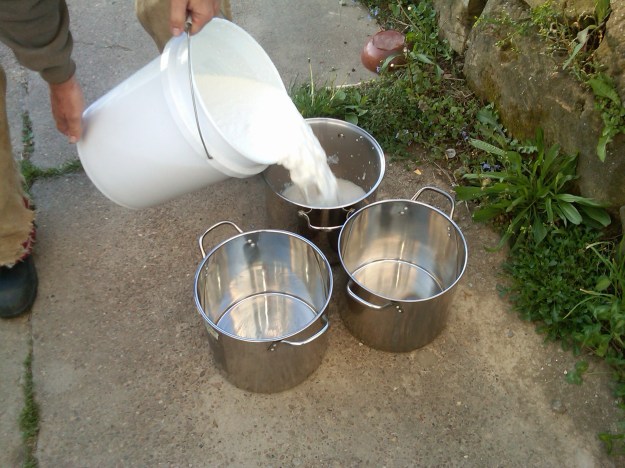
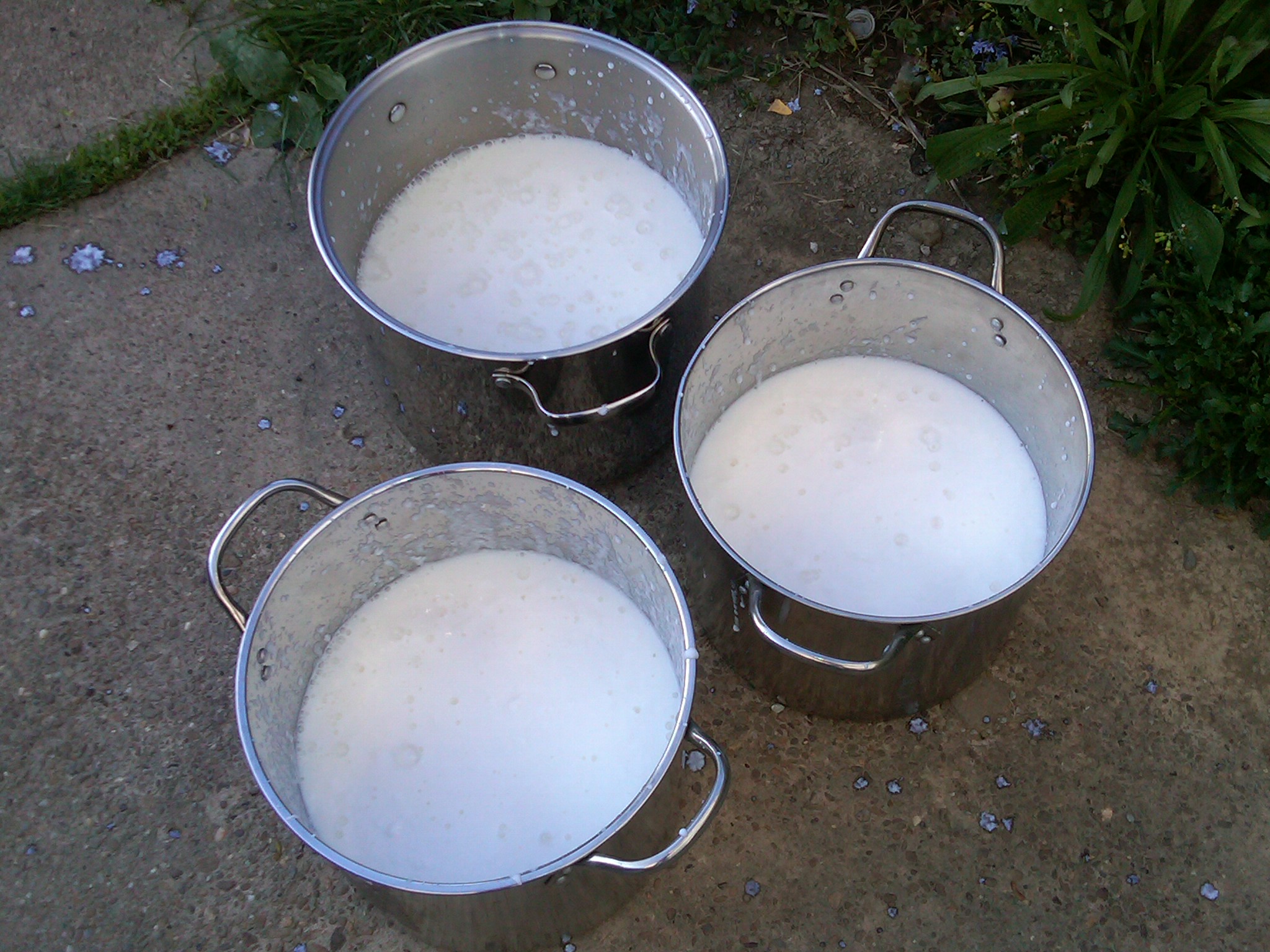
Once the milk has set, we pour it into several stock pots.  (I usually do this outside, because the clumpy consistency makes a lot of messy splashes.)
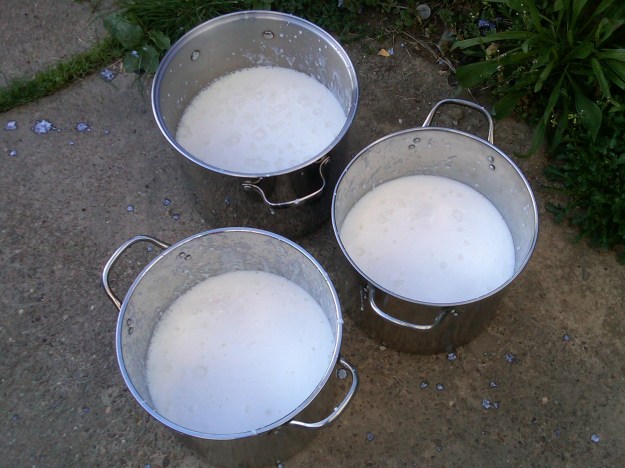
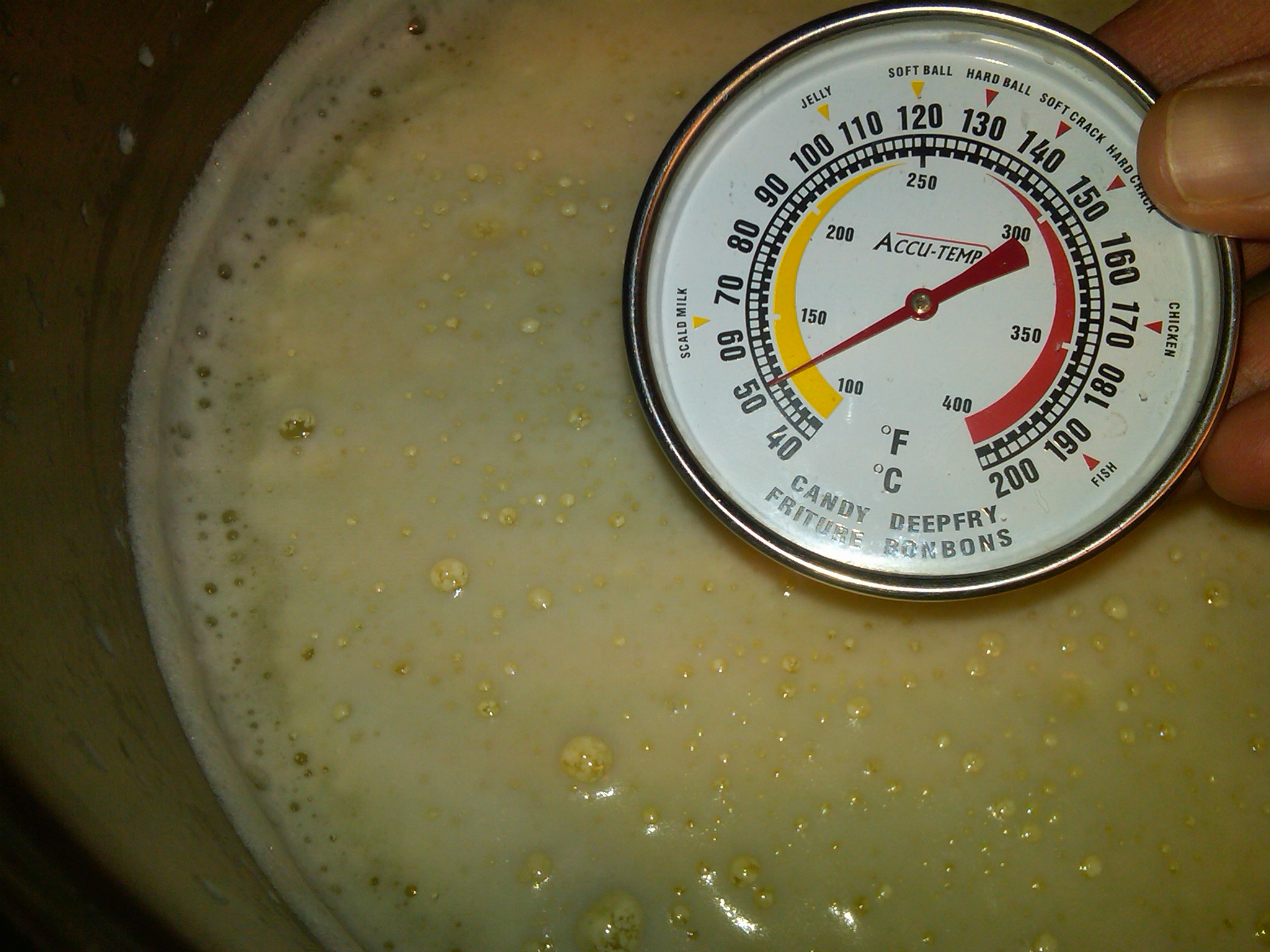
Then we heat the milk slowly to about 120°, stirring every-so-often.
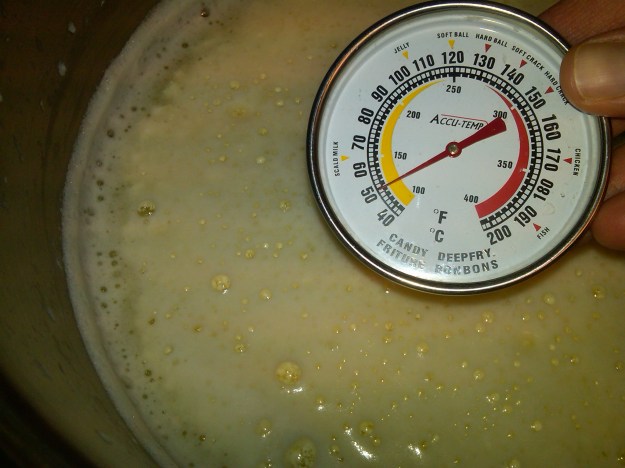
 

You will see as it’s heating, the whey begins to distinctly separate from the curds.

Next we strain the curds through a muslin-lined metal strainer over a large bowl to catch the whey.
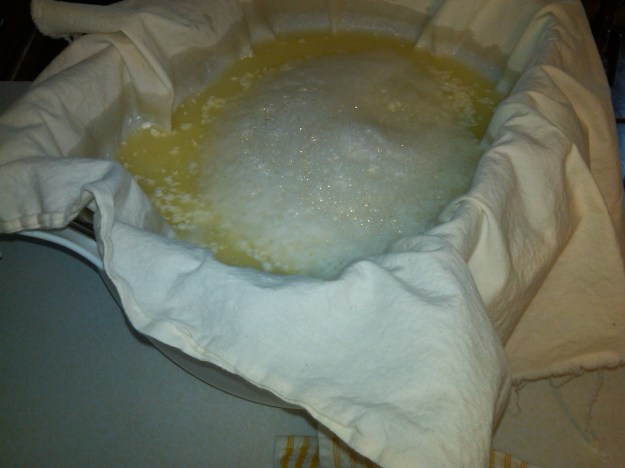
 

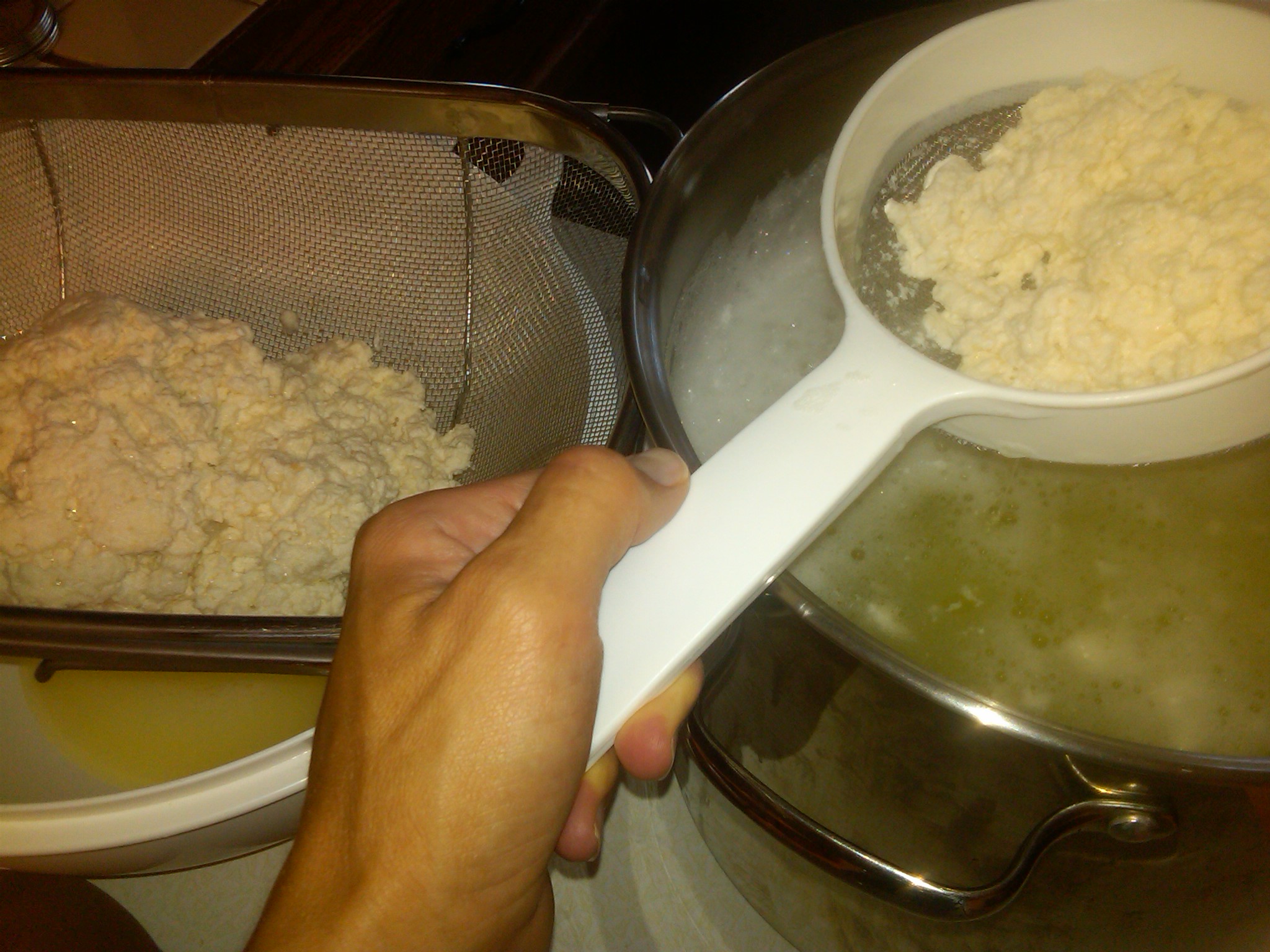
**UPDATED THIS POST 8-5-12** I no longer use the cheesecloth – found that it’s MUCH quicker to just take my hand-held strainer, dip it in the pot, scoop out the clumps of curds, and dump it in another colander with a bowl under it.  SAVES A TON OF TIME! 🙂

Here’s a pic of it:
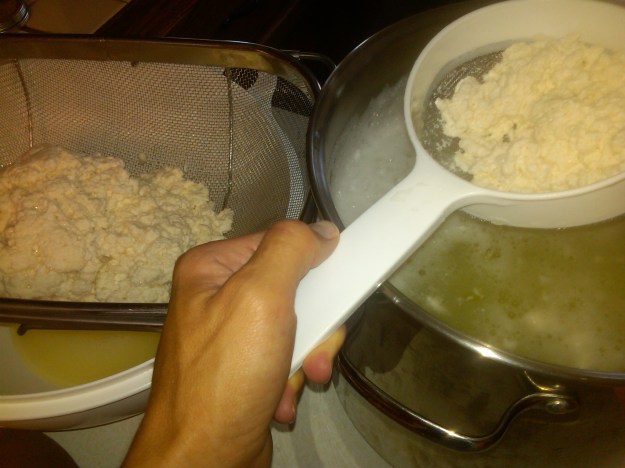
That’s it!  What you have left is cottage cheese.  🙂

This recipe yielded 5 pounds 10.5 ounces of “dry” cottage cheese curds.  If I’m freezing the cottage cheese, I leave it “dry”, and add the cream/milk after thawing it.  We do add cream and/or whole milk in with the curds because we like more of a moist cottage cheese when we eat it fresh, but that is purely optional. For our family, we like to add the same weight in cream to the curds & mix it up.
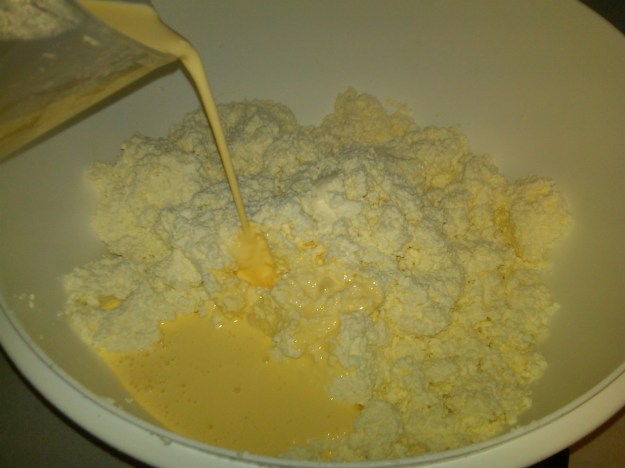
We prefer to use 1/2 cottage cheese & 1/2 ricotta cheese when we make stuffed shells.  🙂
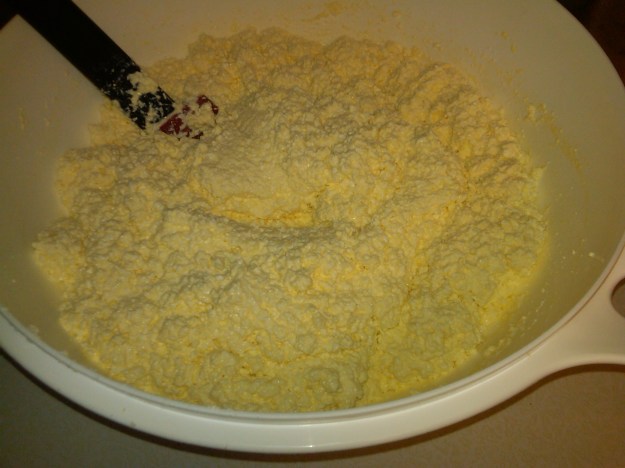
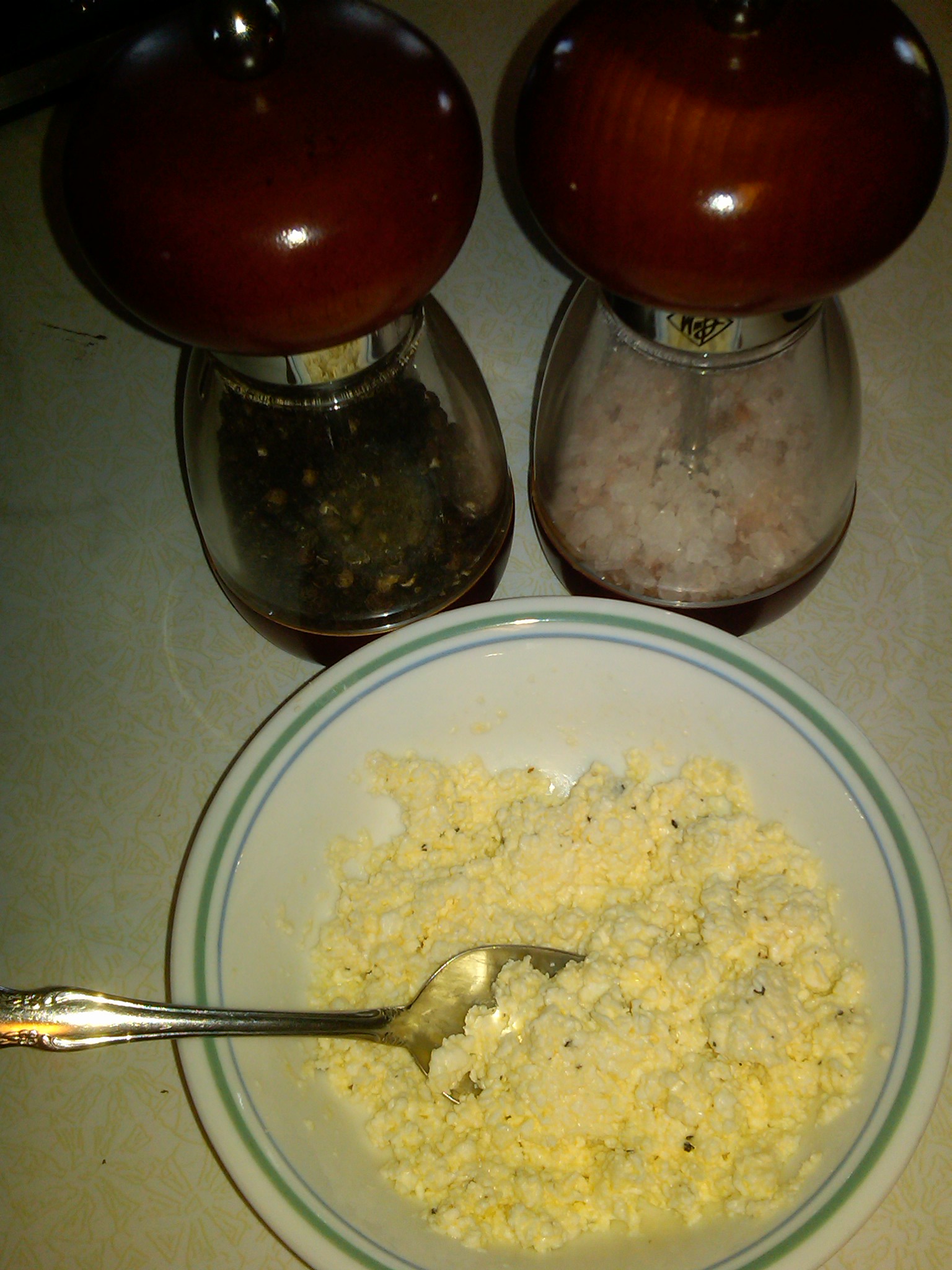
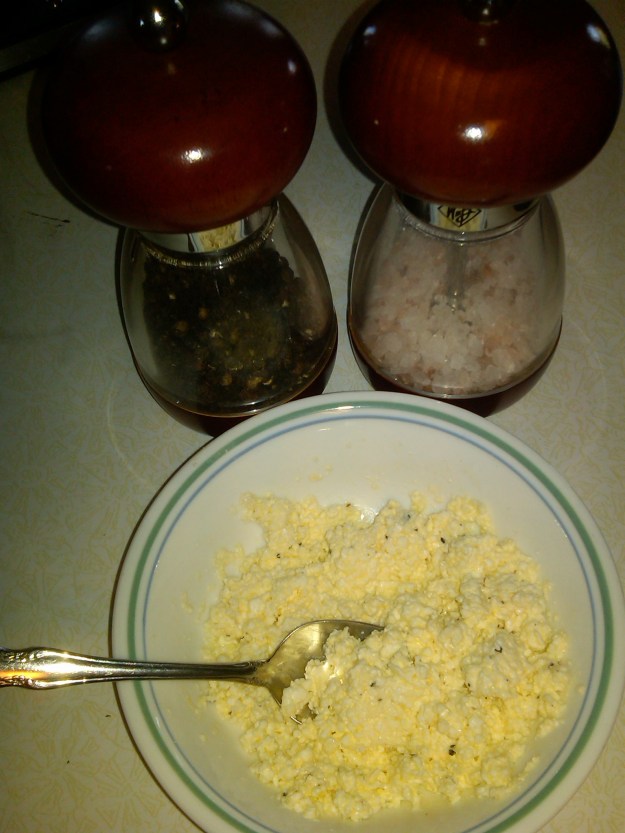
We usually store our cottage cheese plain, because half of us like to eat it w/ homemade jam mixed in, and the other half prefer to eat it with freshly ground sea salt and pepper.

Mmmmm! 🙂
Cute, but NOT REALLY….

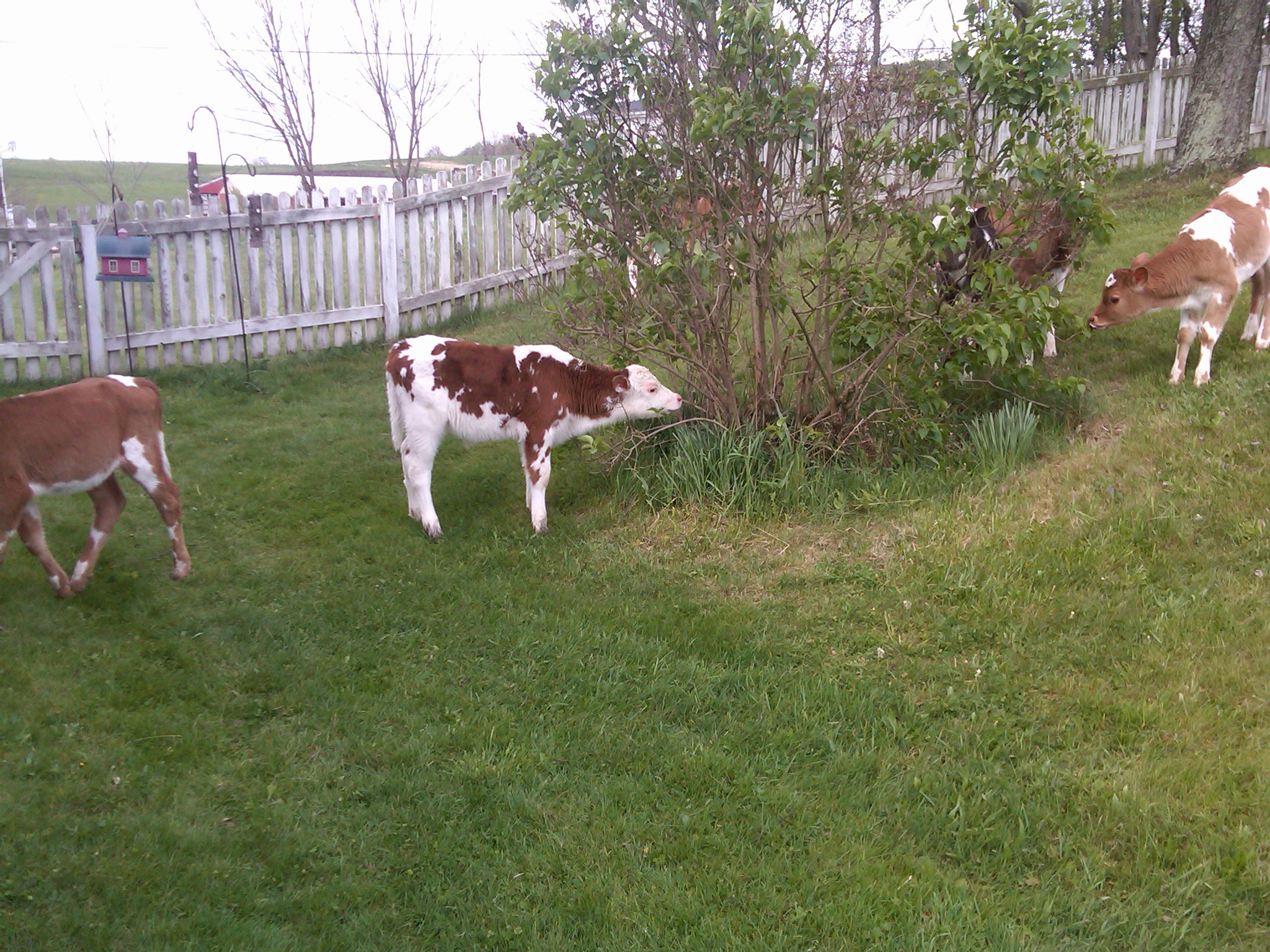
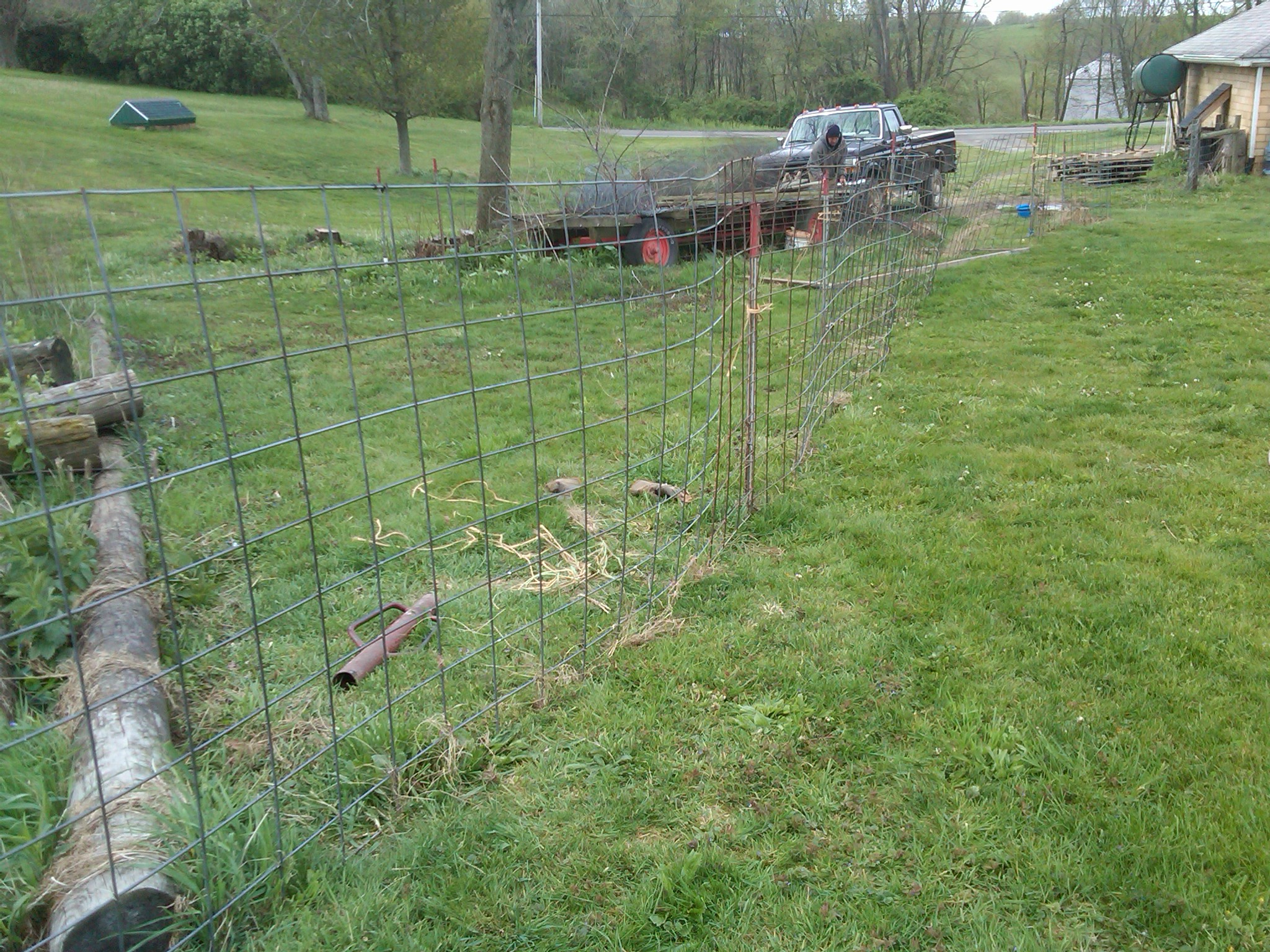
I can’t even begin to tell you the sickening feeling I felt this morning as I walked home after milking. I looked out toward our house & saw a beautifully colored herd of calves IN OUR FRONT YARD DOWN BY THE ROAD!!! I yelled to Mike & our bodies went into “adrenaline mode”… Thankfully, the happy herd came toward ME & away from the road. Our backyard has an old picket fence around three quarters of it, so we managed to get them to go in one of those corners, by our house. The boys and I were able to keep them here while Mike scrambled to put up a temporary fence along the open section.


So what did Mike use for the temporary fence?? Extra metal fence posts & old cattle panels from when we took our “eggmobile” apart several years ago. They’ve been “waiting” for us to clean them up, but we hadn’t gotten to that yet…

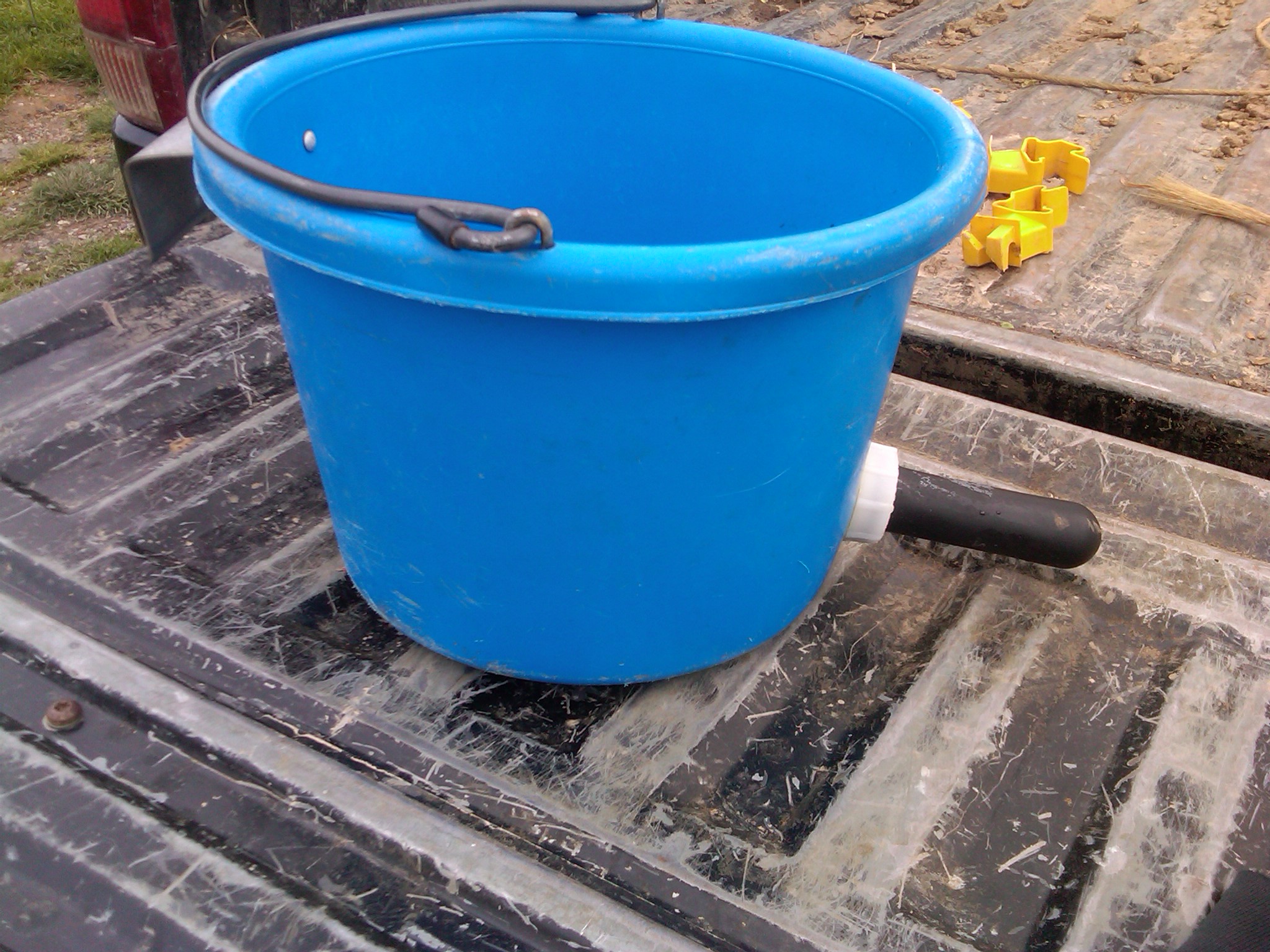
Once the “fence” was complete, we all felt more secure. If this mini herd decided to run together, at least this should keep them contained in our back yard. Fortunately, all it took was coaxing from the lure of a bottle bucket to get a couple calves following us. The rest followed suit, and all babies are back in their home, safe & sound! 🙂
Dear Father – we are so thankful that none of our calves were hurt this morning as they adventured outside of their fence. Too often we’ve forgotten about the “function” of our picket fence, because we dwell on how it doesn’t “look” nice, with peeling paint & loose boards. You showed us today, the value of its function, and we THANK YOU! It’s so amazing to me how you incorporate our “mistakes” into Your plan. May we not be discouraged with long “to-do” lists, but be encouraged that as long as we do our best to be wise with our moments because we are ALWAYS working for You, You can use ANYTHING to help us.  May this incident cause the four of us to be extra diligent in backing each other’s work up – like double checking gates, so that we don’t repeat this same mistake again. AMEN


It’s official: We’ve gone bananas!

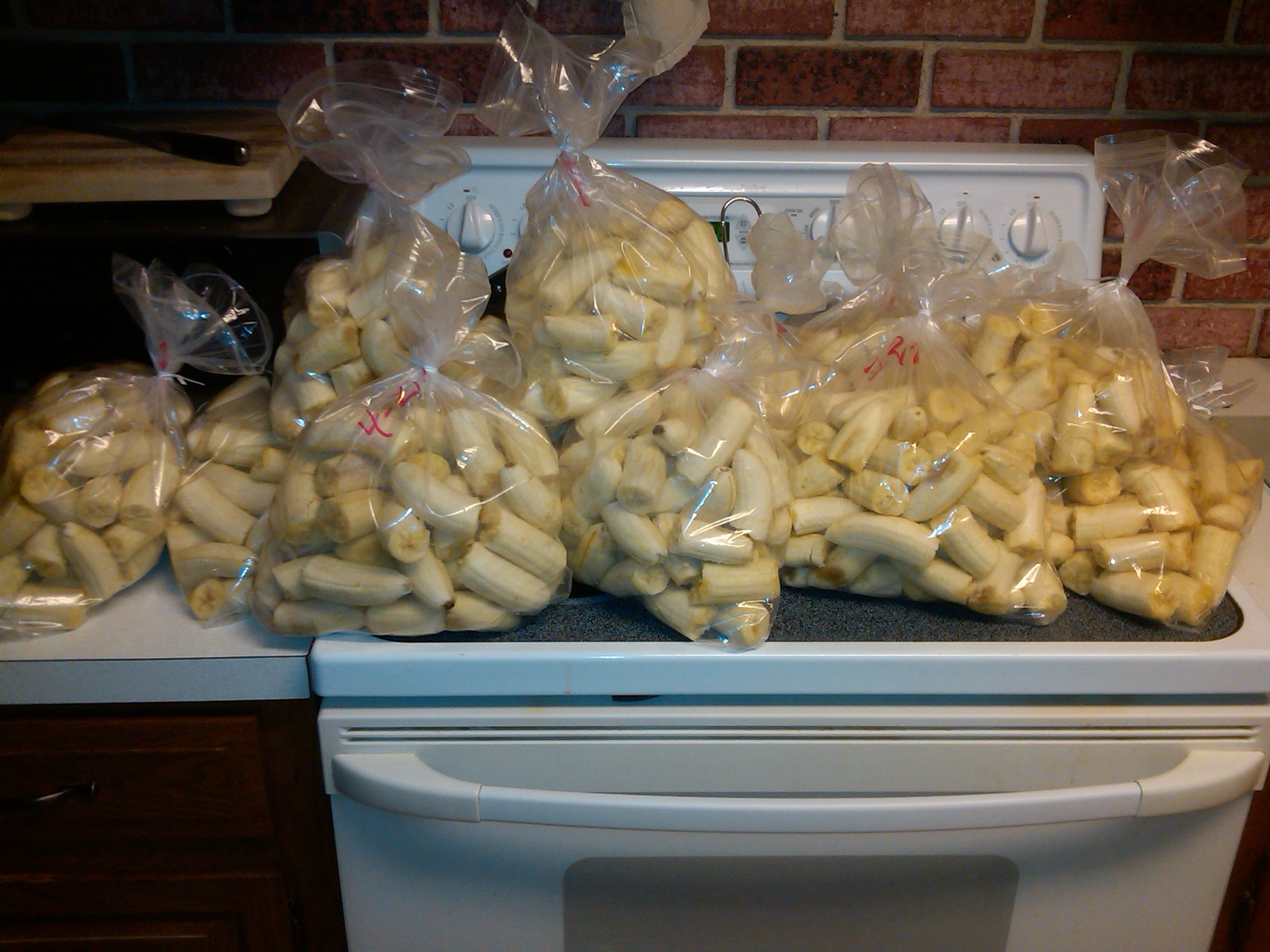
We bought the last of ALL the bananas at our local grocery store this week… Spent an evening peeling & chunking them for freezing.

I guess we should be set to make our kefir shakes for a little while, lol! 🙂
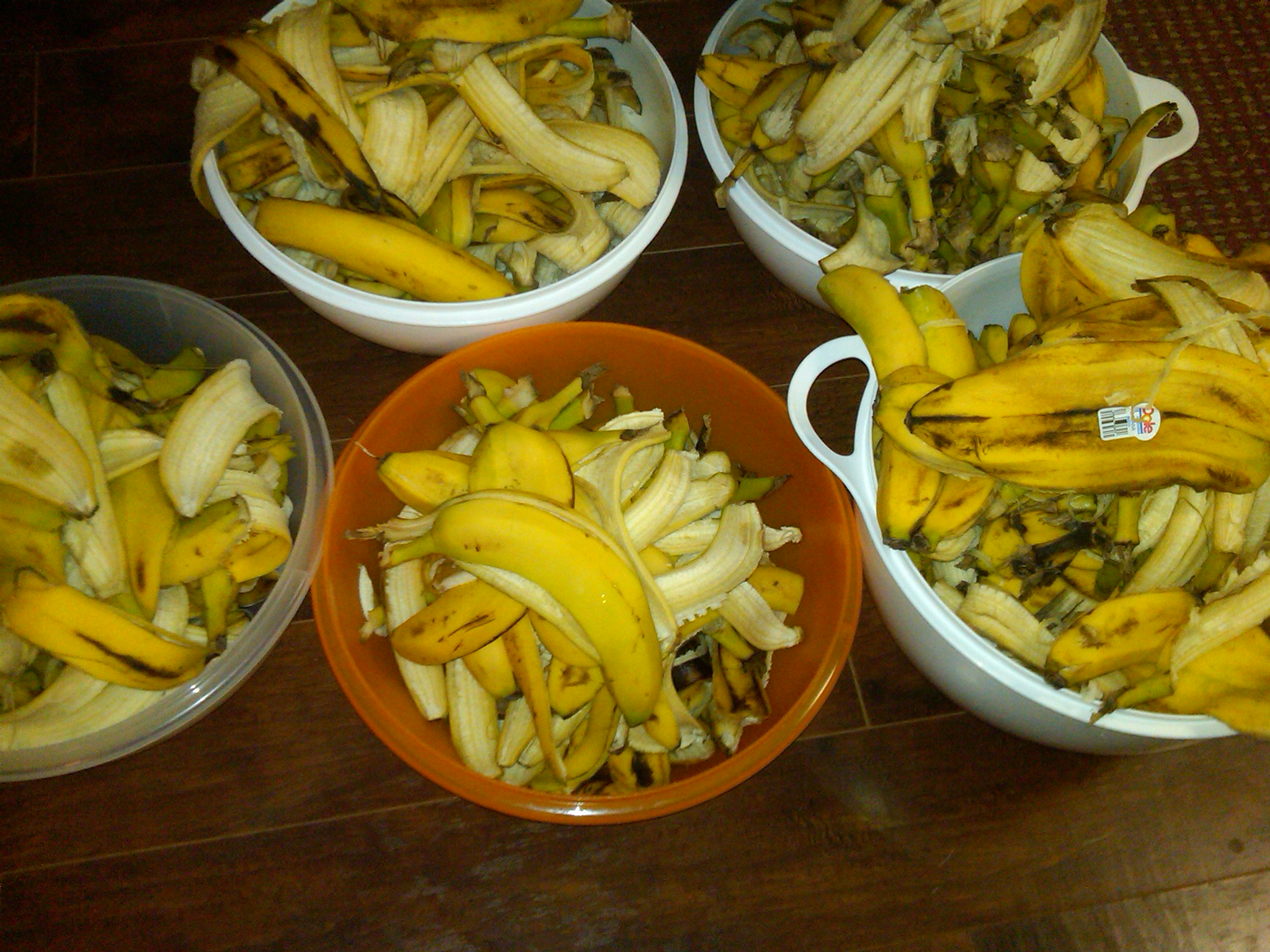
Sadly, our Waynesburg IGA is closing its doors very soon. 😦 Even though we didn’t need to shop here a lot, it sure was nice to have it for when we DID need something.  Ours prayers go out to all the people who have lost their jobs, and for our community – at the loss of another local business.