Category Archives: Recipes

Beef broth yield 2012

This post will be a record of quarts of beef broth canned this year + our recipe.

Since we just took some beef to the butcher shop, we are using up the beef bones in our freezers before we get more from this batch. Been trying to wait for some cooler days for this, but they seem to be few & far between this season…

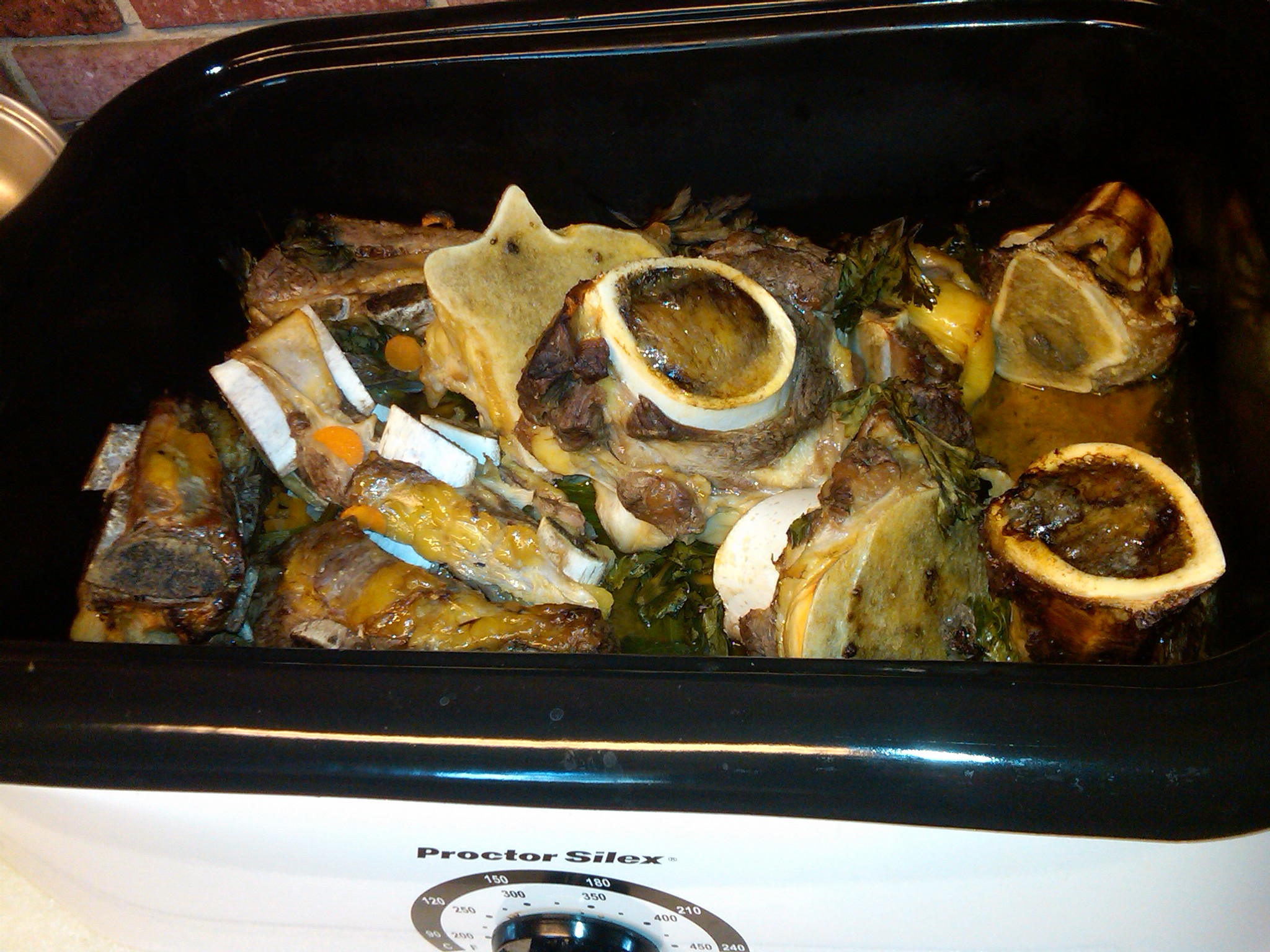
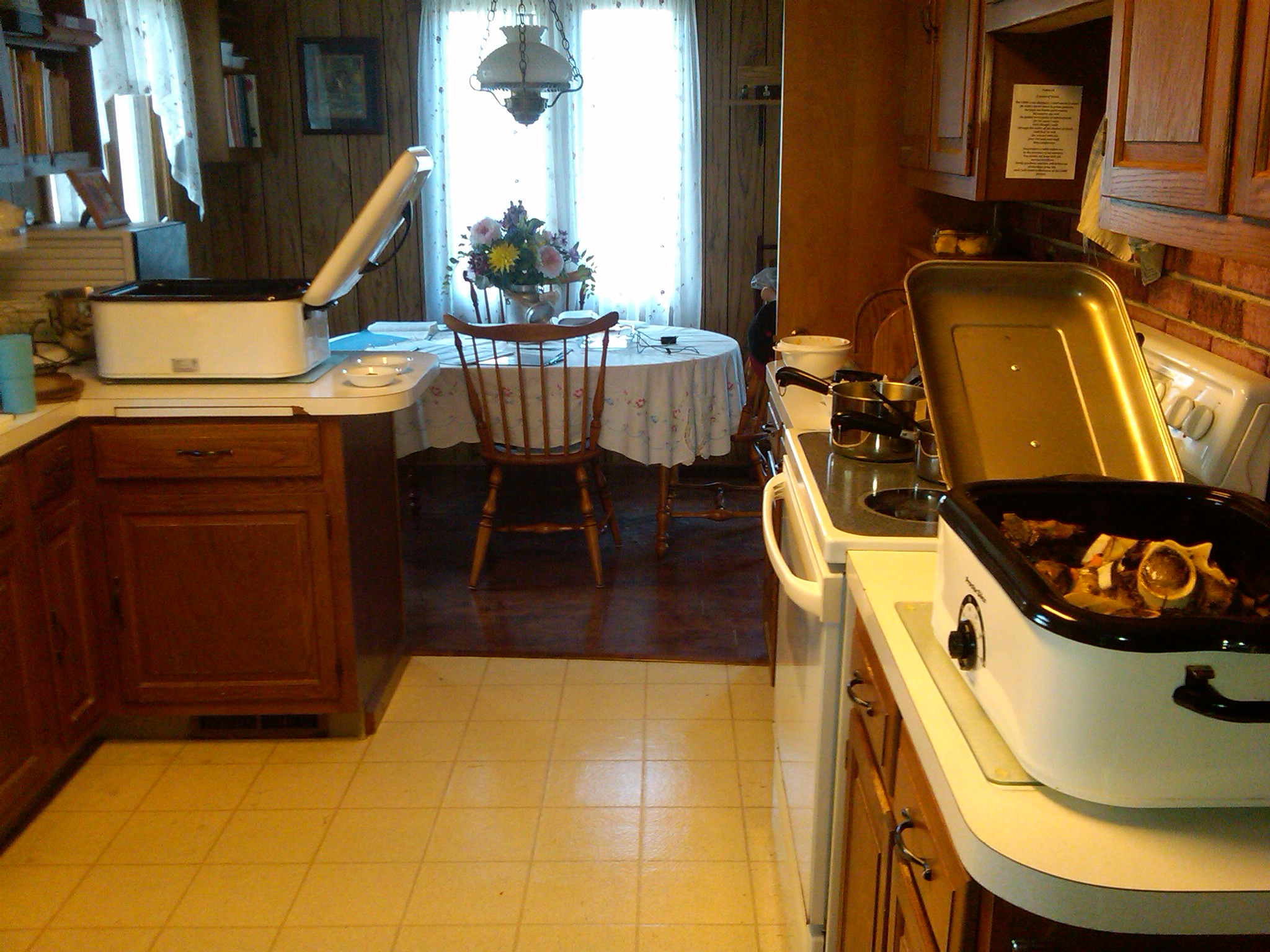
We usually do 4 roasters full of broth stretched over 2 days. Here’s our recipe per roaster:

12# meaty bones
4 Onions
6 Carrots
12 Celery stalks

We brown the bones by lining the roaster with them, & placing the next 3 items on top. Place lid on roaster & roast for 1 hour at 450 degrees – flipping bones halfway through.

[UPDATED 2-5-19: I NO LONGER FLIP THE BONES…MAINLY BECAUSE IT IS MESSY, AND IT TURNS OUT FINE WITHOUT FLIPPING.😉]

Turn off heat.

Add:
9 unpeeled & crushed garlic cloves
1T coarse sea salt
1T peppercorns
1c raw apple cider vinegar
Cold water to fill roaster to top

Let sit for 30 minutes (no lid).

Add lid and bring to boil on high heat. Once boiling, lower heat to keep it at a low simmer. We let it simmer 18 hours or so. (May need to add more water periodically to keep it full.)

Allow it to cool for a bit. Strain it. What’s left is a beautiful, healthy, broth! 🙂

We place the broth in large bowls with lids & let them sit a day or two in the fridge. By then, the fat has solidified on top, and it’s easy to remove the fat layer & begin pressure canning the broth.

Our yield is about 9 quarts per roaster.

[UPDATED 2-5-19: MY 18Q ROASTER FINALLY DIED THIS YEAR, AND WE UPGRADED TO A 22Q ROASTER. BROTH IS STILL GELATENOUS KEEPING THE RECIPE THE SAME, AND YIELD INCREASED TO 11Q]

6-30-12 canned 41 quarts
Chocolate Syrup

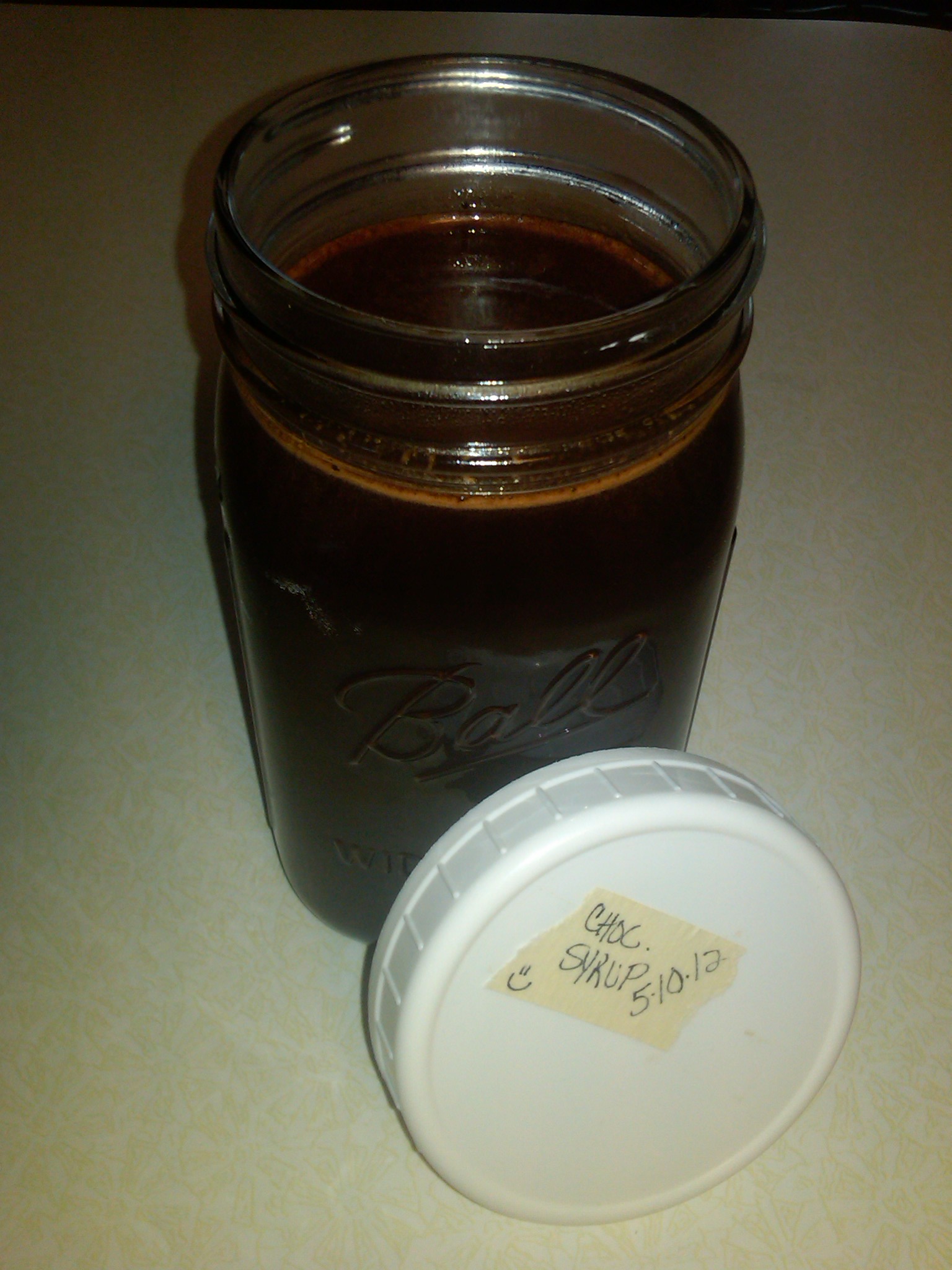
In anticipation of possibly having some HOMEMADE ICE CREAM in the freezer soon, the boys and I made some chocolate syrup this week.  Here’s our recipe:

1c (106g) cocoa powder (organic preferred)

1-1/3c (298g) evaporated cane juice

1c water

1t (8g) sea salt

2t vanilla

6T (3 oz) butter

Mix everything together in a saucepan and keep whisking on medium heat until smooth. Besides on ice cream, it works well for chocolate milk & hot chocolate!  Yields 3/4 of a quart of syrup.

Homemade Ice Cream

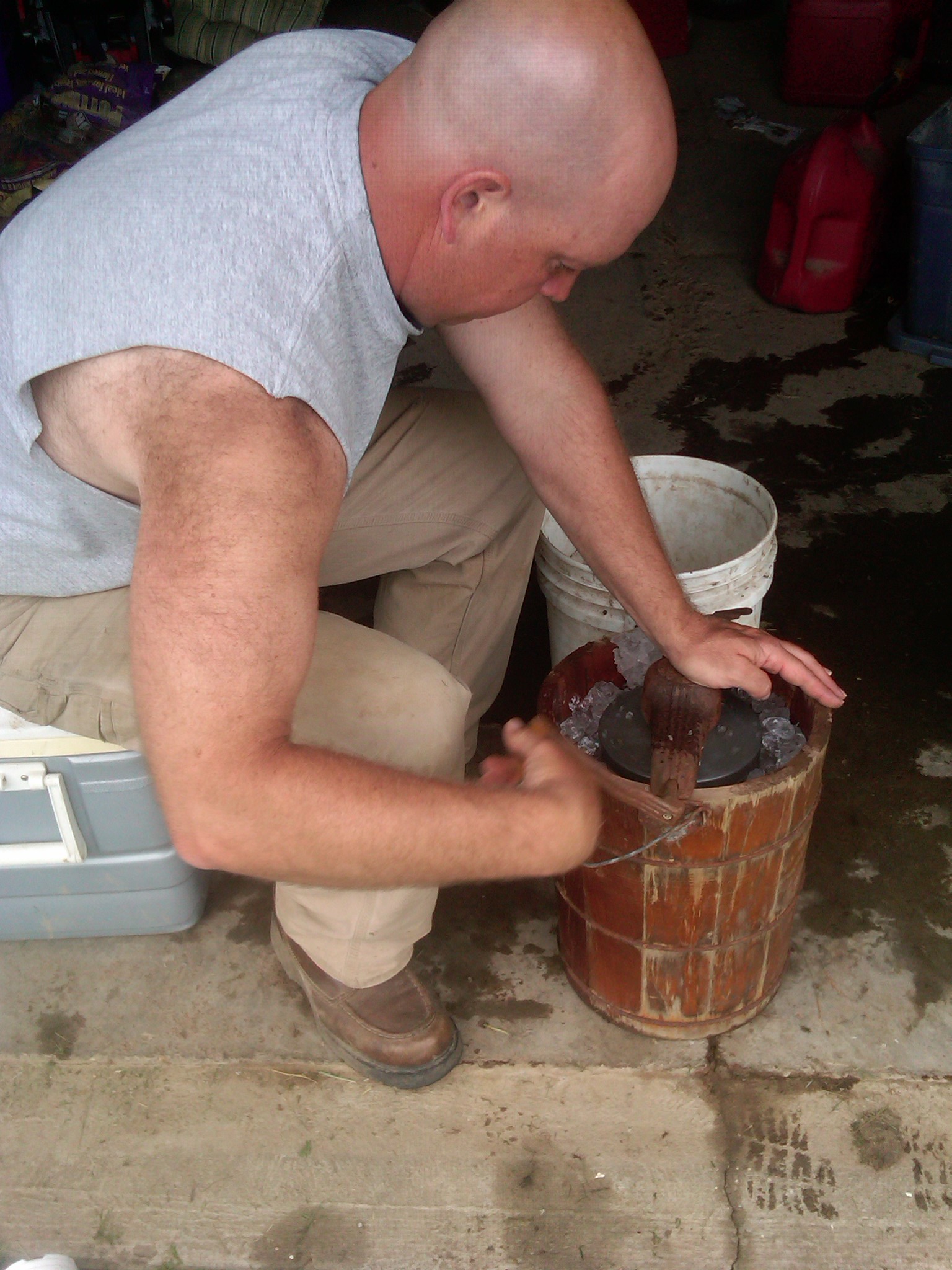
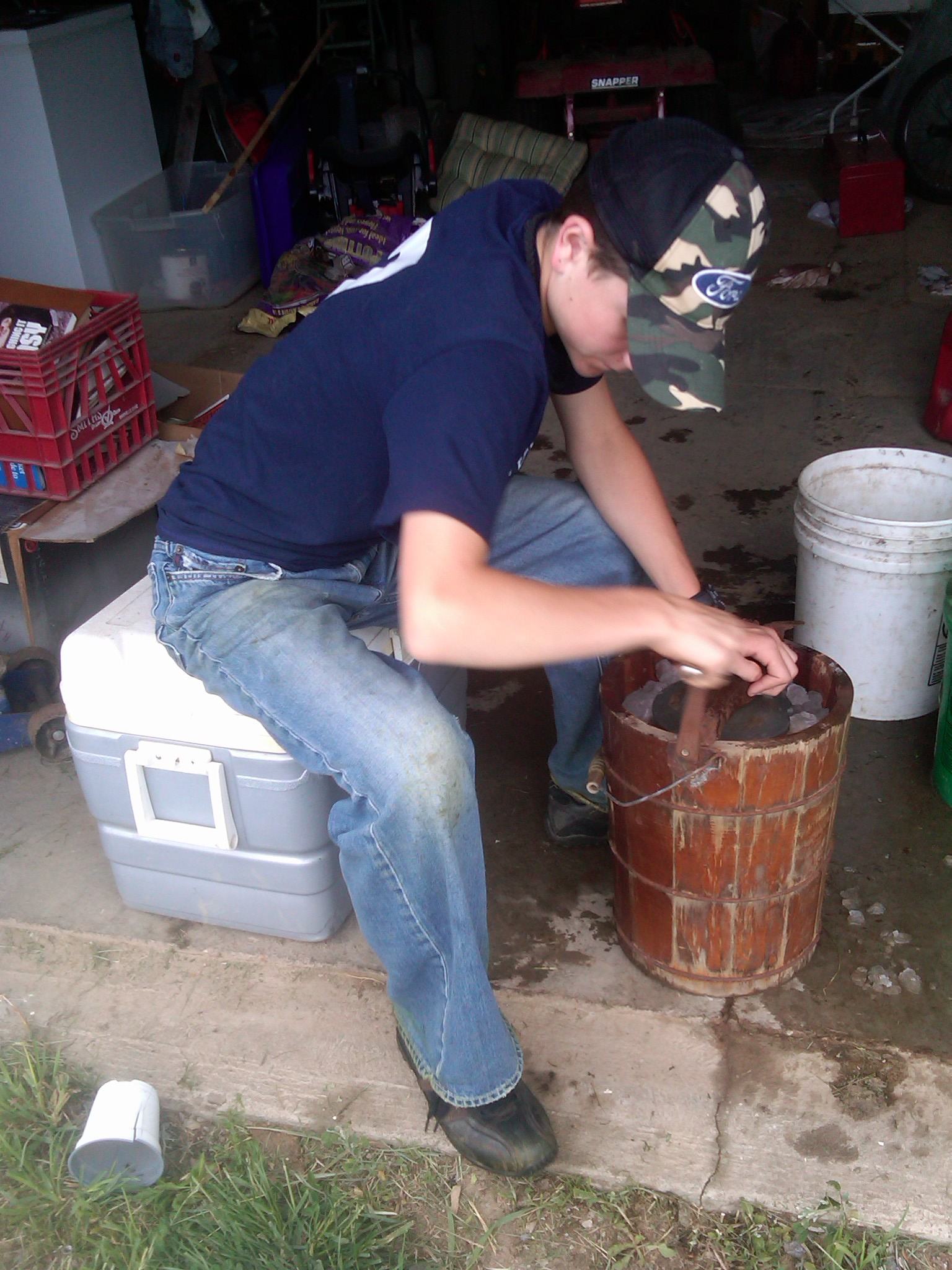
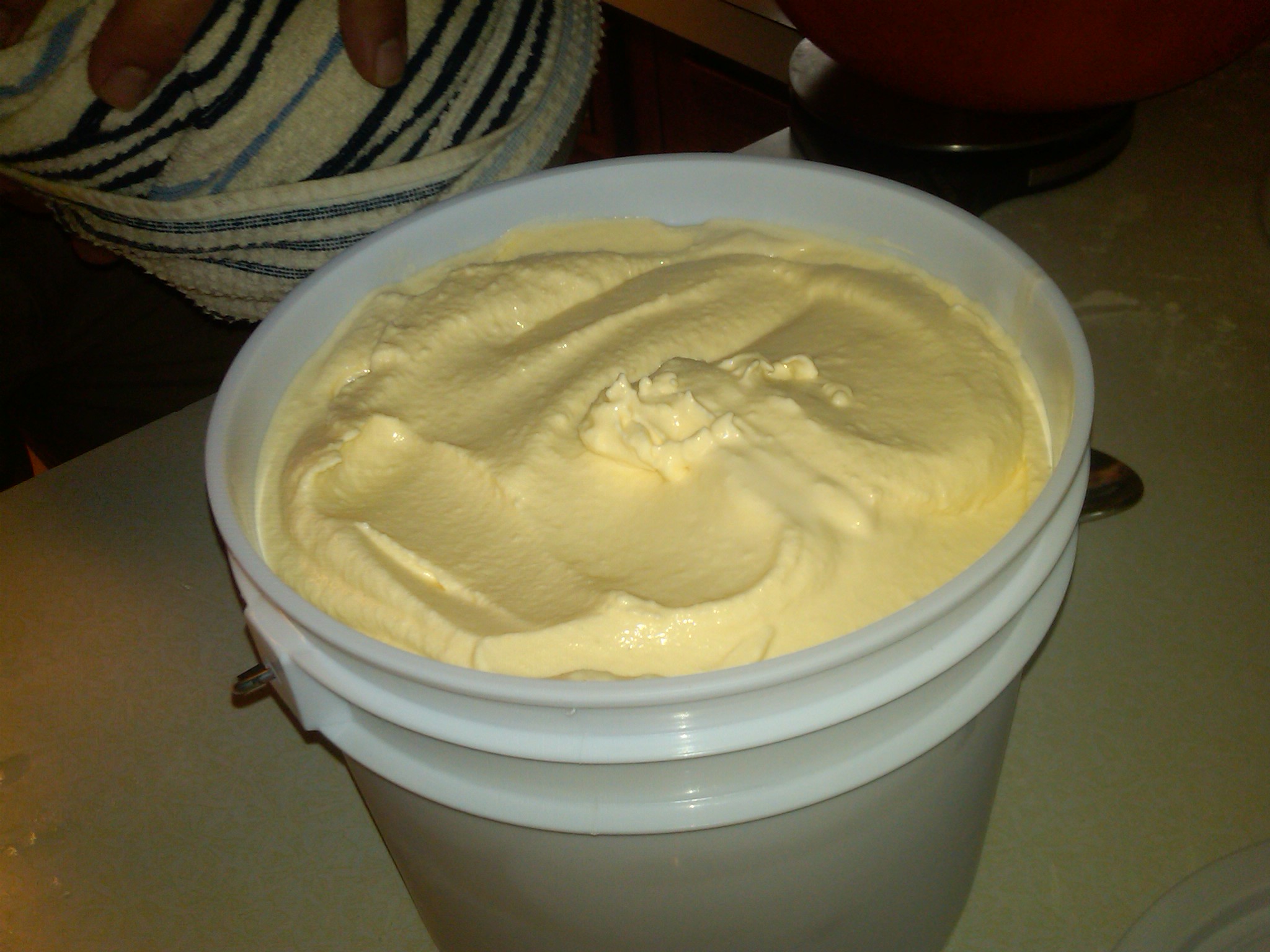
Made our first batch of homemade ice cream for the season TODAY!  An early Mother’s Day gift from Mike & the boys.  🙂

We use a White Mountain hand-crank ice cream maker (it used to be Mike’s Grandma’s) – and each boy took turns churning…

Here’s our vanilla ice cream recipe.

Whisk together:

6c cream

6c milk

3T vanilla

2-1/4c evaporated cane juice

3 pinches of sea salt

MY FAVORITE FLAVOR is Coffee, so after the first batch of vanilla, they made another batch & whisked in 1/4c instant coffee granules to the above recipe.  YUM! 🙂

And what do 3 ornery boys look like when there’s a crazy woman “blogging” them as they work???

I LOVE MY BOYS, LOL! 🙂

Our version of “ranch” dressing

Our boys L-O-V-E ranch dressing!  They use it as a dip for veggies & pizza, as a salad dressing, & as a condiment.  (Must be in their “blood”, lol – my brother used to make ALL KINDS of crazy concoctions using this same dressing…remember, Mark??)  🙂

Now that I read ingredient labels, though, I’m not such a fan of this dressing – no matter how good it tastes.  😦  So, I’ve had a (secret) goal of trying to make a homemade version.  I have actually found many ideas online, but never got past printing out the recipe, lol.  We had some friends out for dinner last fall, and with their salad, they brought a, you-guessed-it, HOMEMADE RANCH DRESSING!!!  Now… if I TASTE something, and already know it’s good, I’m much more motivated to make it…

So glad our first batch of sour cream was ready today – we’ve all been waiting for more of this dressing!

MANY THANKS TO THE WHITMORE FAMILY! 🙂

1-1/3c plain yogurt (or mayo 286g)

1c sour cream (227g)

1c milk (227g)

1/4c raw apple cider vinegar (65g)

2t each of dried parsley(2g), garlic powder(7g), sea salt(14g), & onion powder(7g)

1t dried dill weed(1g)

Whisk everything together, and place in fridge.

Yield is one quart.

Homemade Sour Cream

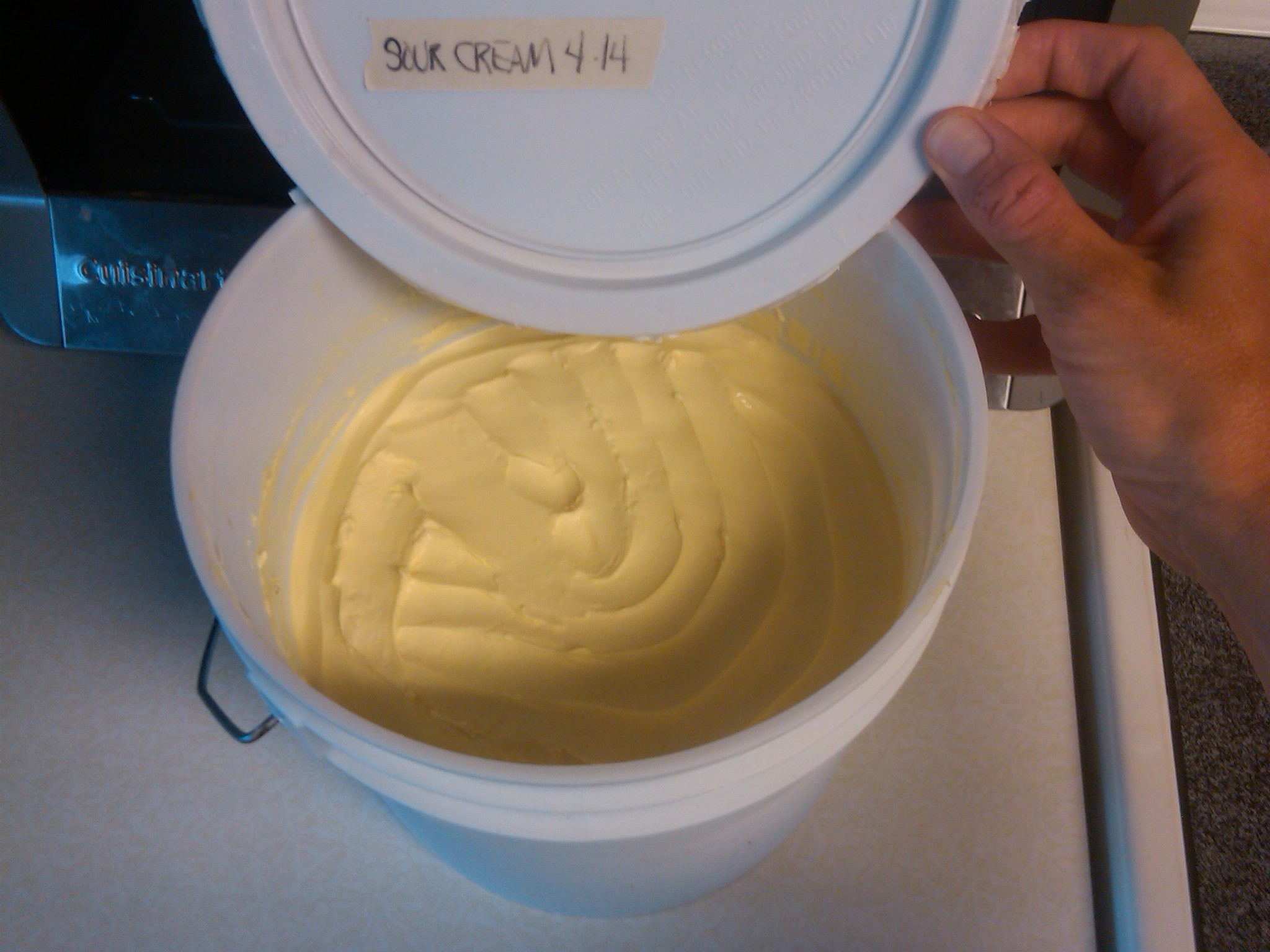
We stumbled on this one  a couple years ago.  We accidentally left our freshly separated cream outside (in an airtight container).  Didn’t find it until the next day when we went back to milk.  We decided to put it in the fridge & check it out later.  Then we forgot about it!  Fast forward a couple weeks – remembered, & checked it.  A beautiful, thick, sour cream!  From that point forward, that’s how we make our sour cream:

Let fresh cream sit at room temp in airtight container for a day.

Place in fridge where it won’t get moved around – allow it to just sit in there for several weeks.

Scrape off thin, top layer & enjoy! 🙂

(We use it from the top first.  It seems the deeper you go, the thinner it is, which is why we don’t mix it all up, either.)

Granola

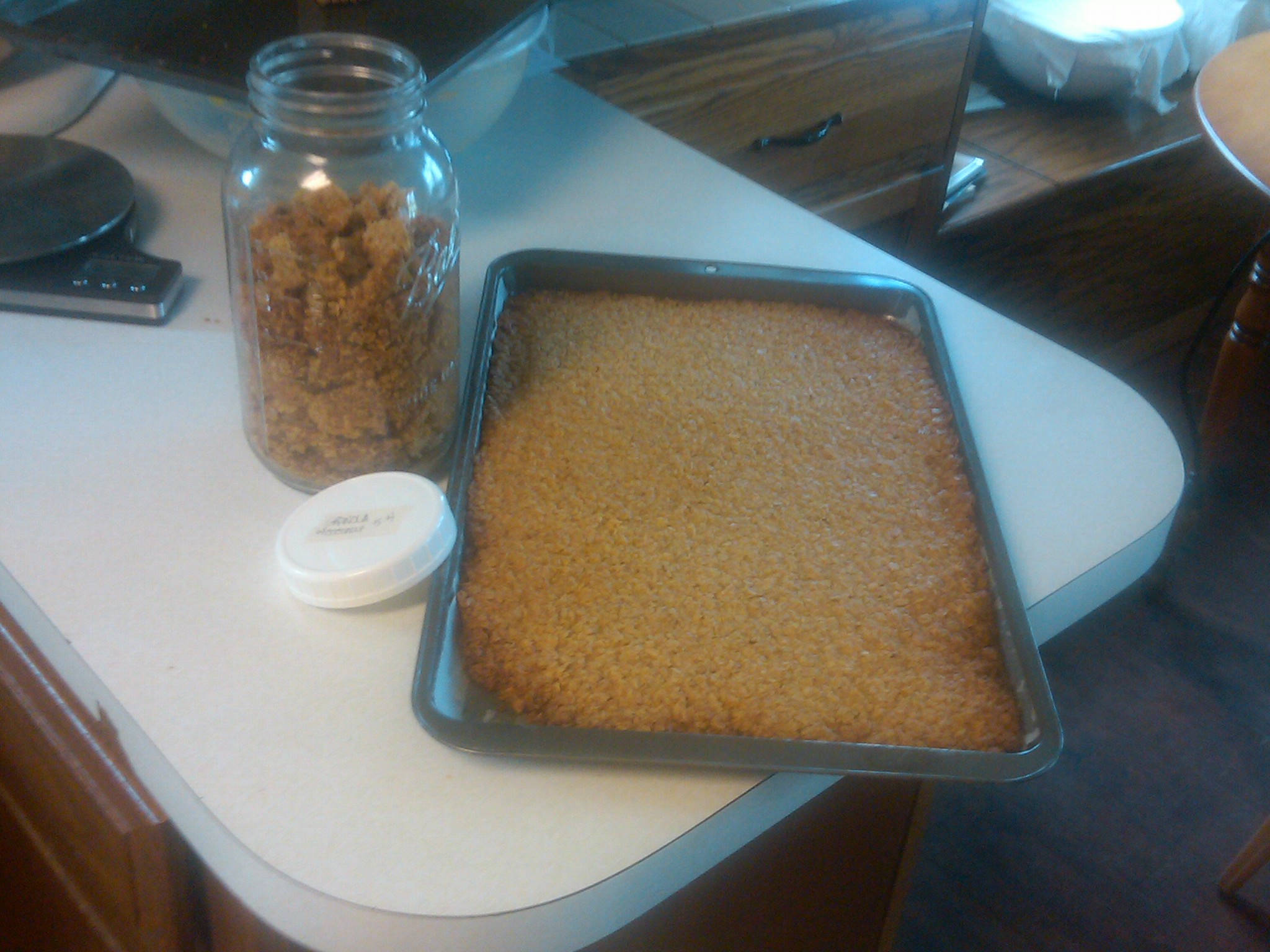
We’ve tried many granola recipes over the years, and it seems we’ve finally found one everyone likes.  It’s not the healthiest it COULD be, but there’s plenty of ways we can improve on it over time. 🙂  Here’s the recipe:

8c (768g) organic rolled oats

1-1/3 (298g) organic evaporated cane juice + 1-1/3T sorghum (this is what we use in place of brown sugar)

2T maple sugar

2c (1 pound) room temp  butter

1-1/2c crushed honey roasted peanuts -OR- 1-1/2c unsweetened coconut flakes

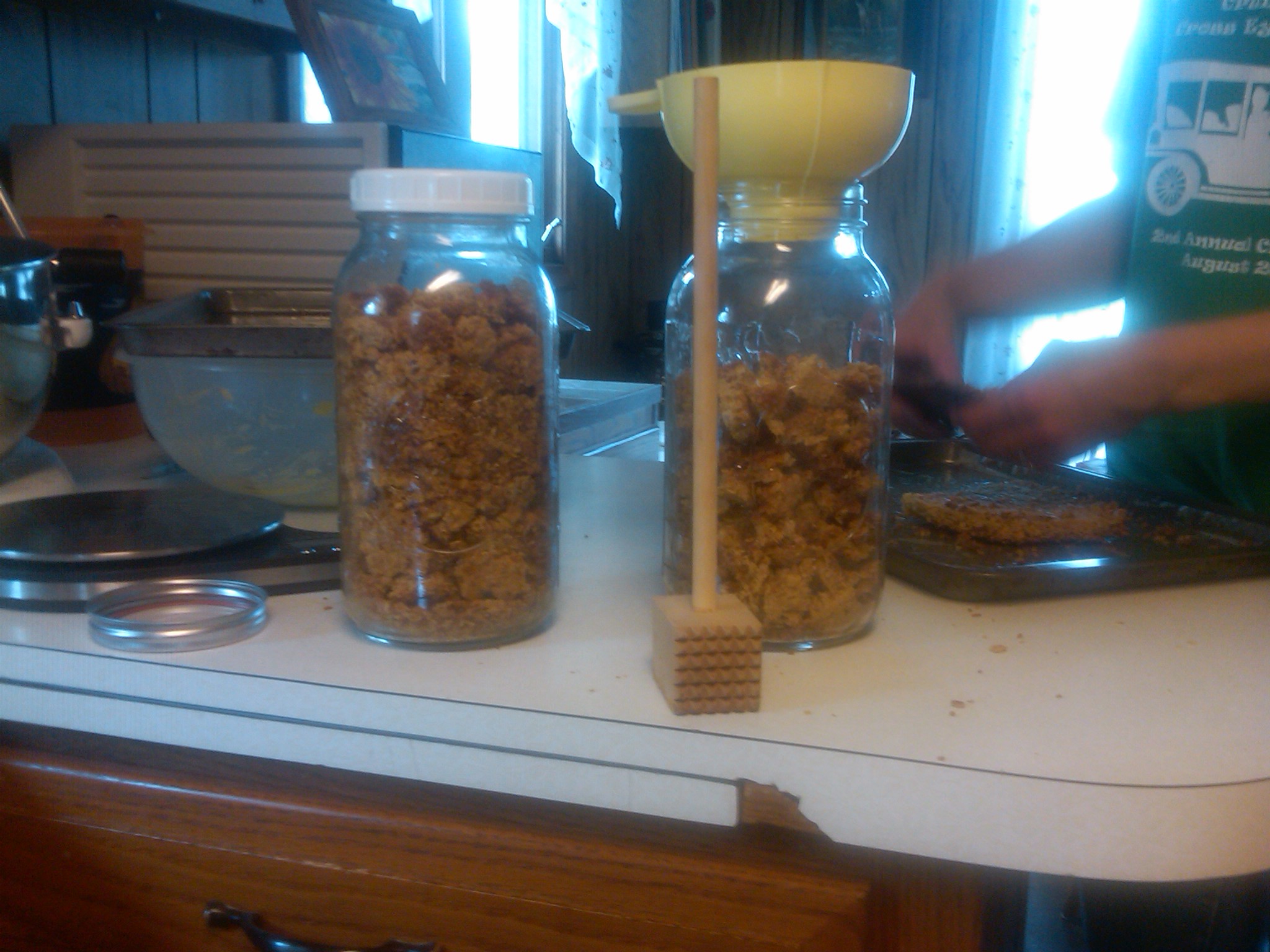
We mix everything together in our heavy duty stand mixer.  Spread evenly onto 2 cookie sheets lined with parchment paper.  Bake about 24 minutes at 350°.

Cool, crumble, and store.  🙂

In the future, perhaps we can soak the oats first, use less sweetener, and soak/roast the nuts… Gotta have something to work towards, right? 🙂

Hummingbirds are back!

We noticed a hummingbird outside our dining room window on May 1st.  We normally have a nectar feeder out there, but didn’t have it out yet.  So, we whipped up a batch of nectar this week, and hung up the feeder.  🙂

Here’s what we do to fill a feeder our size:

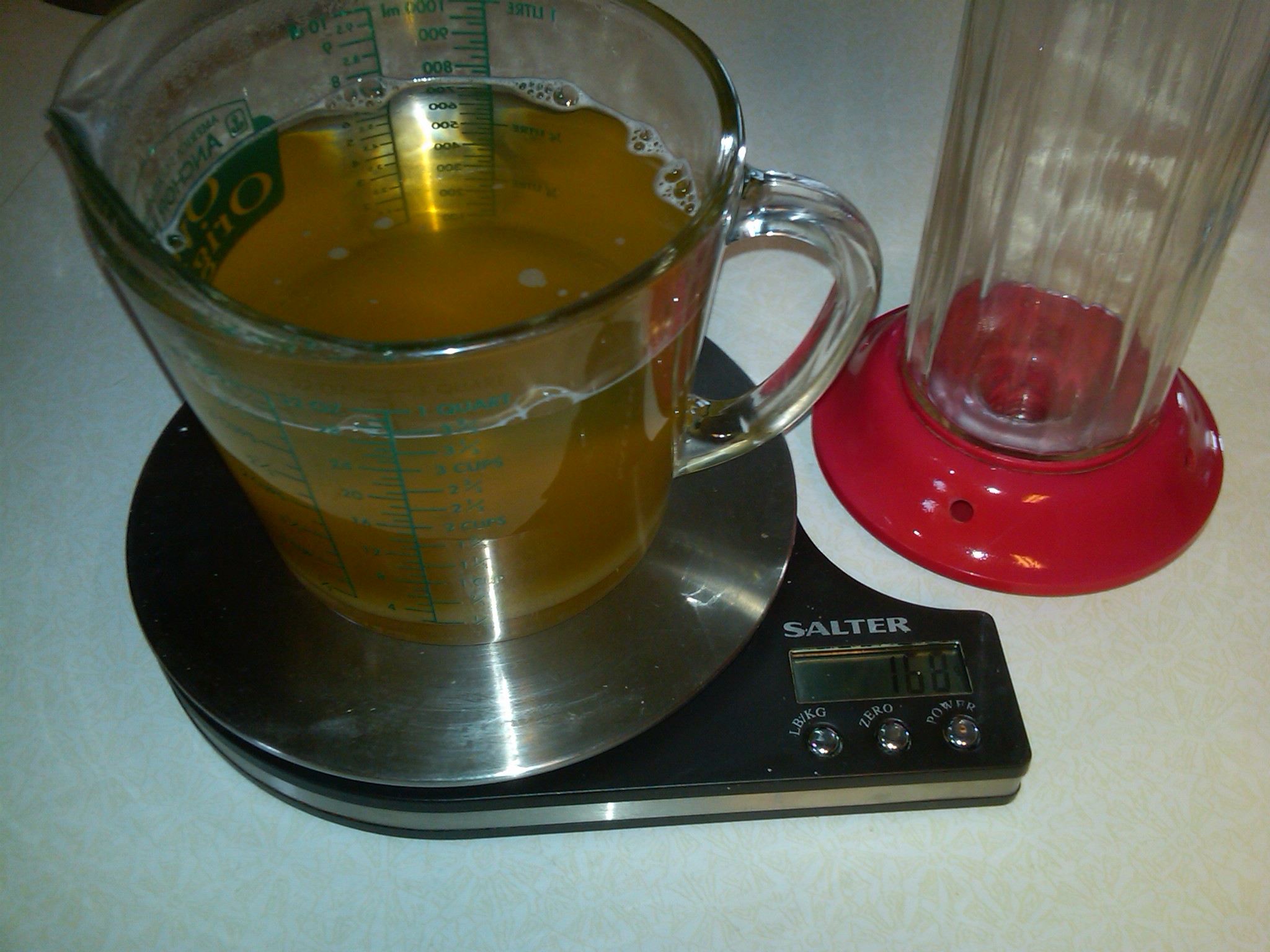
Boil 3 cups water & pour into glass measuring pitcher.

Add 168 grams or 3/4 cup organic, evaporated cane juice (since we don’t buy white sugar anymore, the birds get what we get…).

Mix until dissolved, cool, add to feeder.

It usually takes “our” hummingbirds about one week to polish this amount off. 🙂

Here’s a view from our dining room window.  A trio of bird seed, suet, and nectar!  🙂

Homemade Yogurt

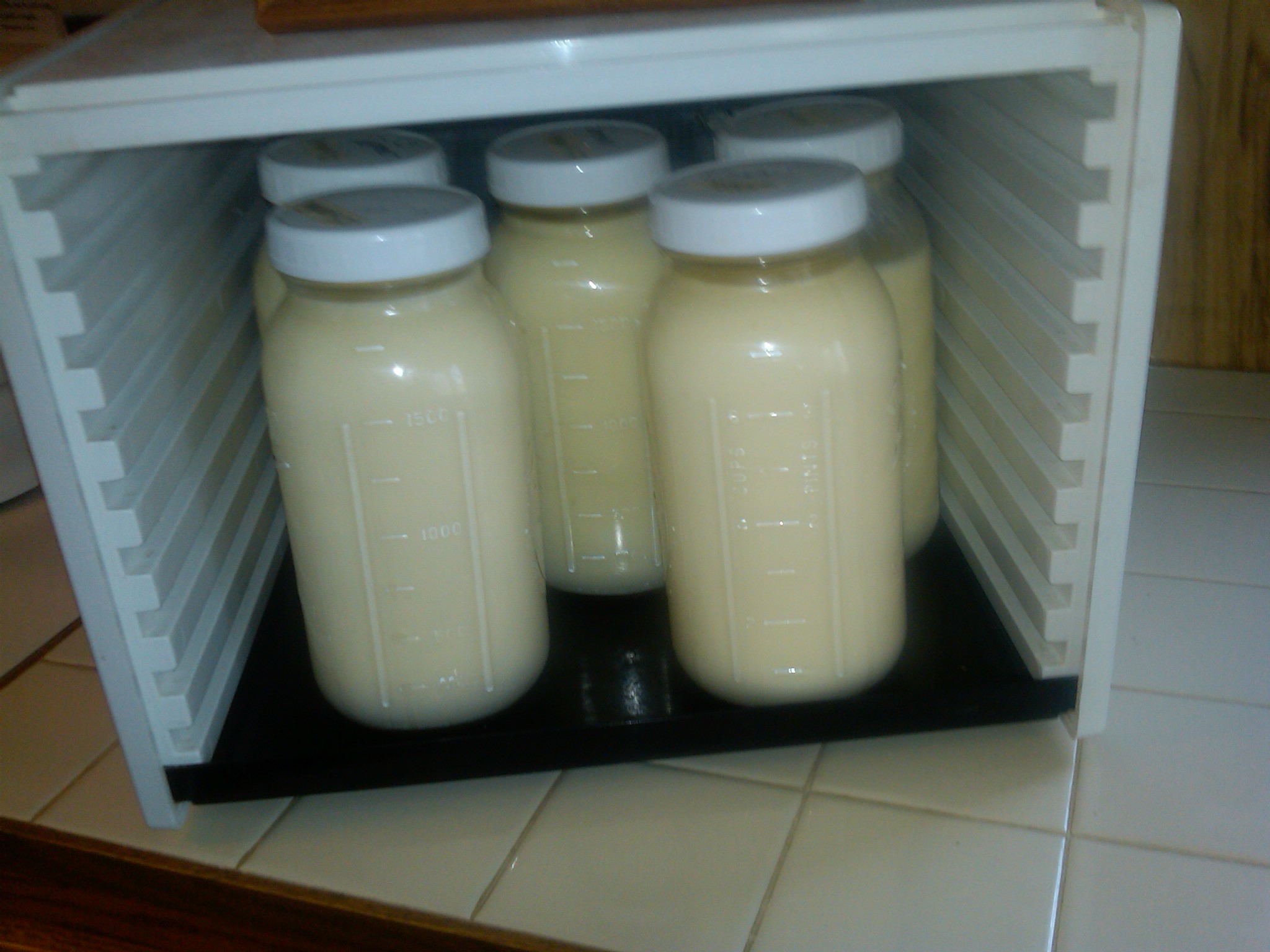
Made 3.25 gallons of yogurt this batch. 2.5 gallons were plain & 3 quarts were vanilla. Thought I’d share what we do… 🙂
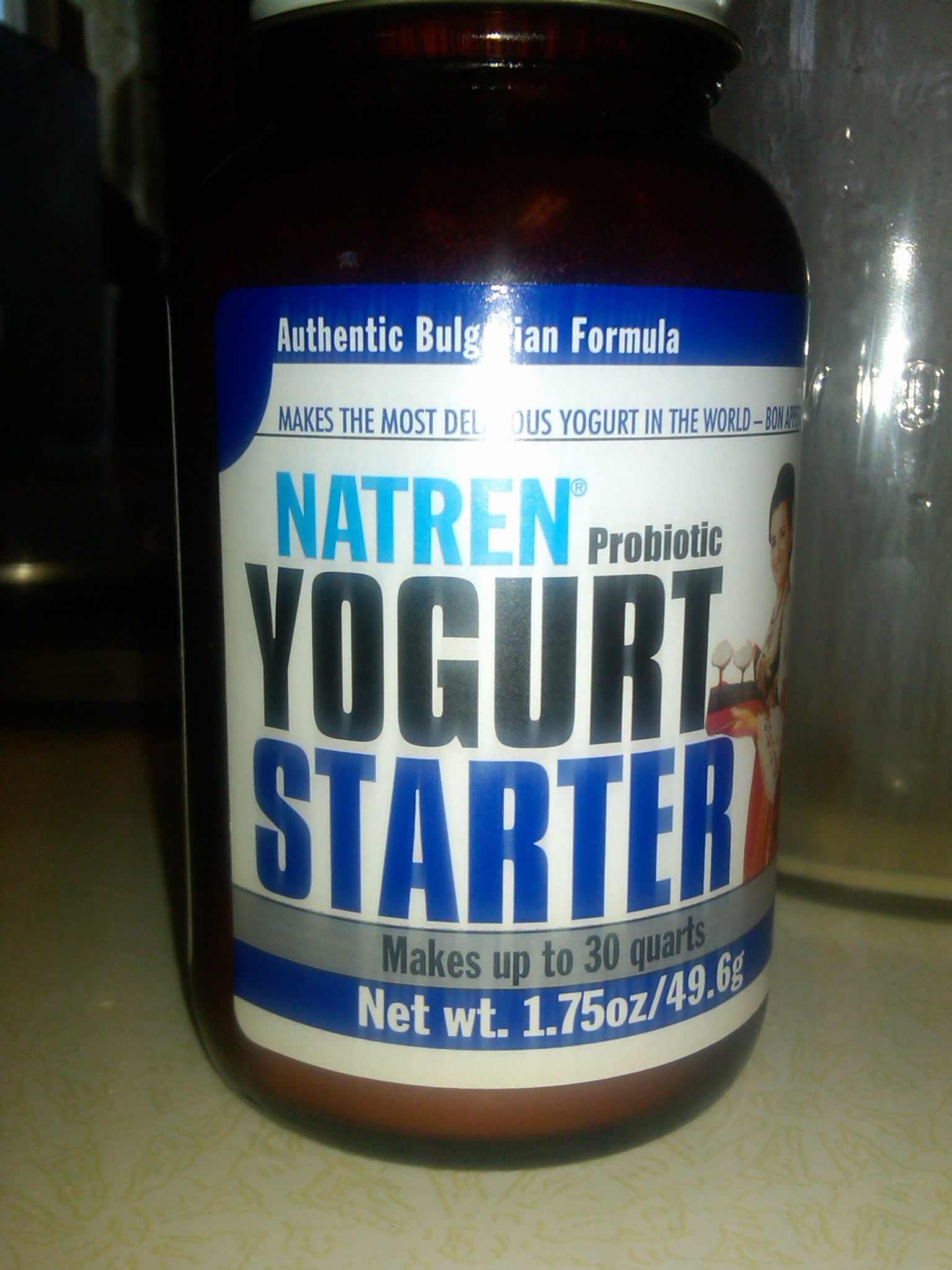
Our PREFERRED method of making yogurt is the “direct set” method. 1/2t of Natren yogurt starter per quart & whisk in 1 quart fresh milk.

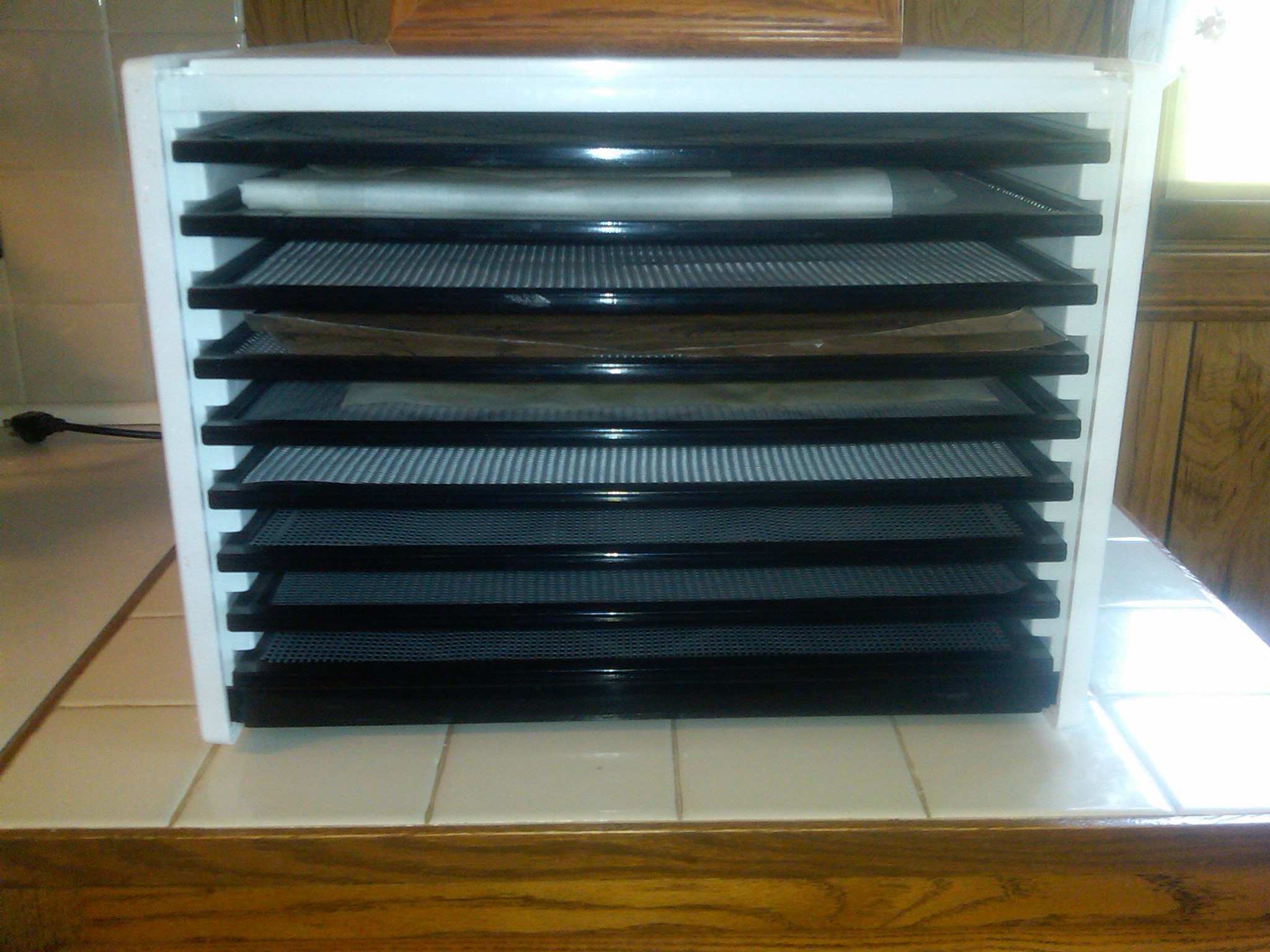
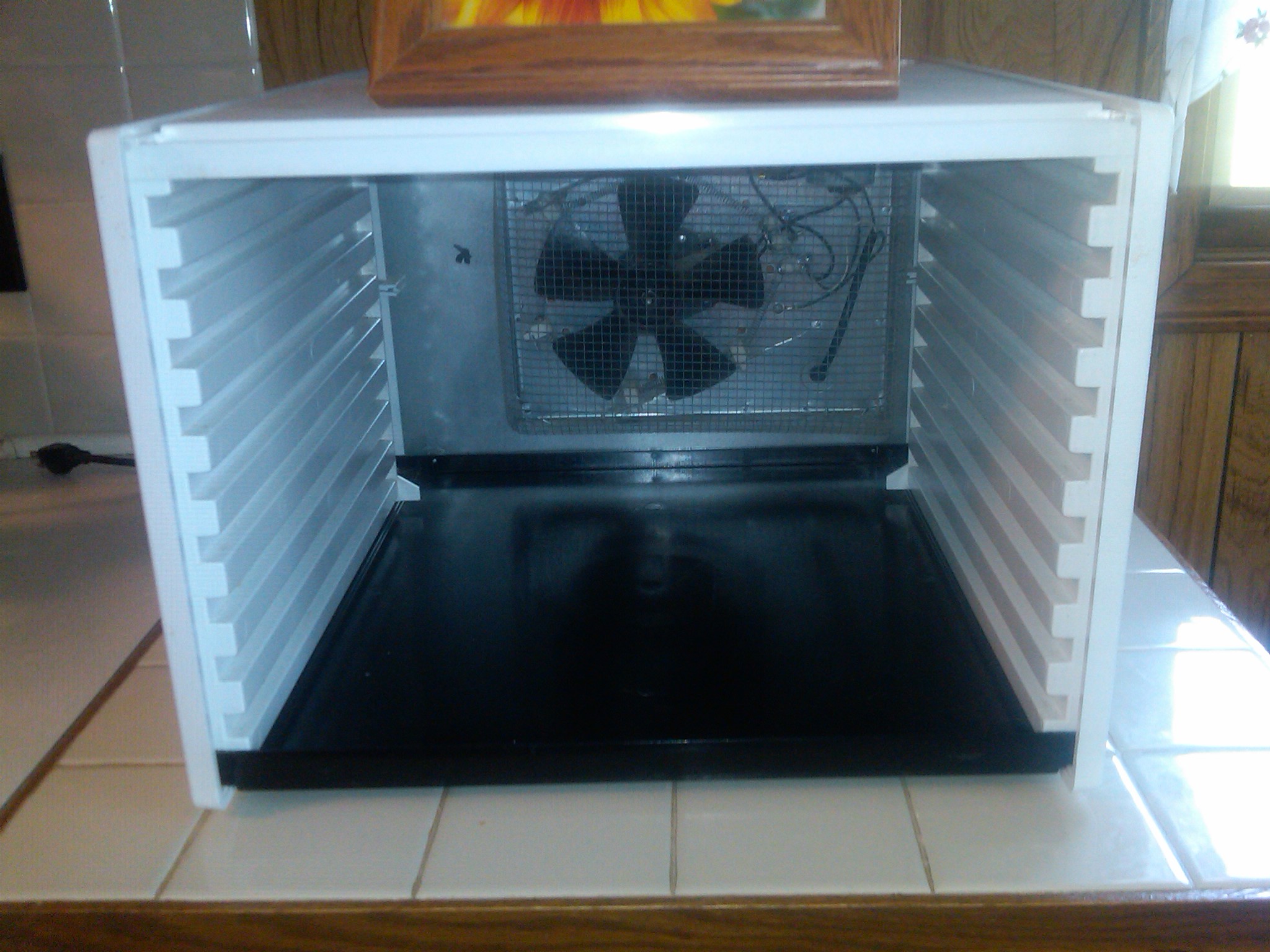
From there it goes directly into our dehydrator where it incubates at 101 degrees for 24 hours.  (If we want a flavored yogurt, we whisk it in right before we incubate it.)

HOWEVER, since Natren is kinda pricey, we cannot afford to make such large amounts of yogurt with this powder.  We’ve tried using plain yogurt from a previous batch as the starter for the new batch, but it wasn’t resulting in a consistent end product.  (It’s also not fun finding out after 24 hours that it didn’t work & we need to re-do…)

So, that all being said, here is how we normally make our yogurt:

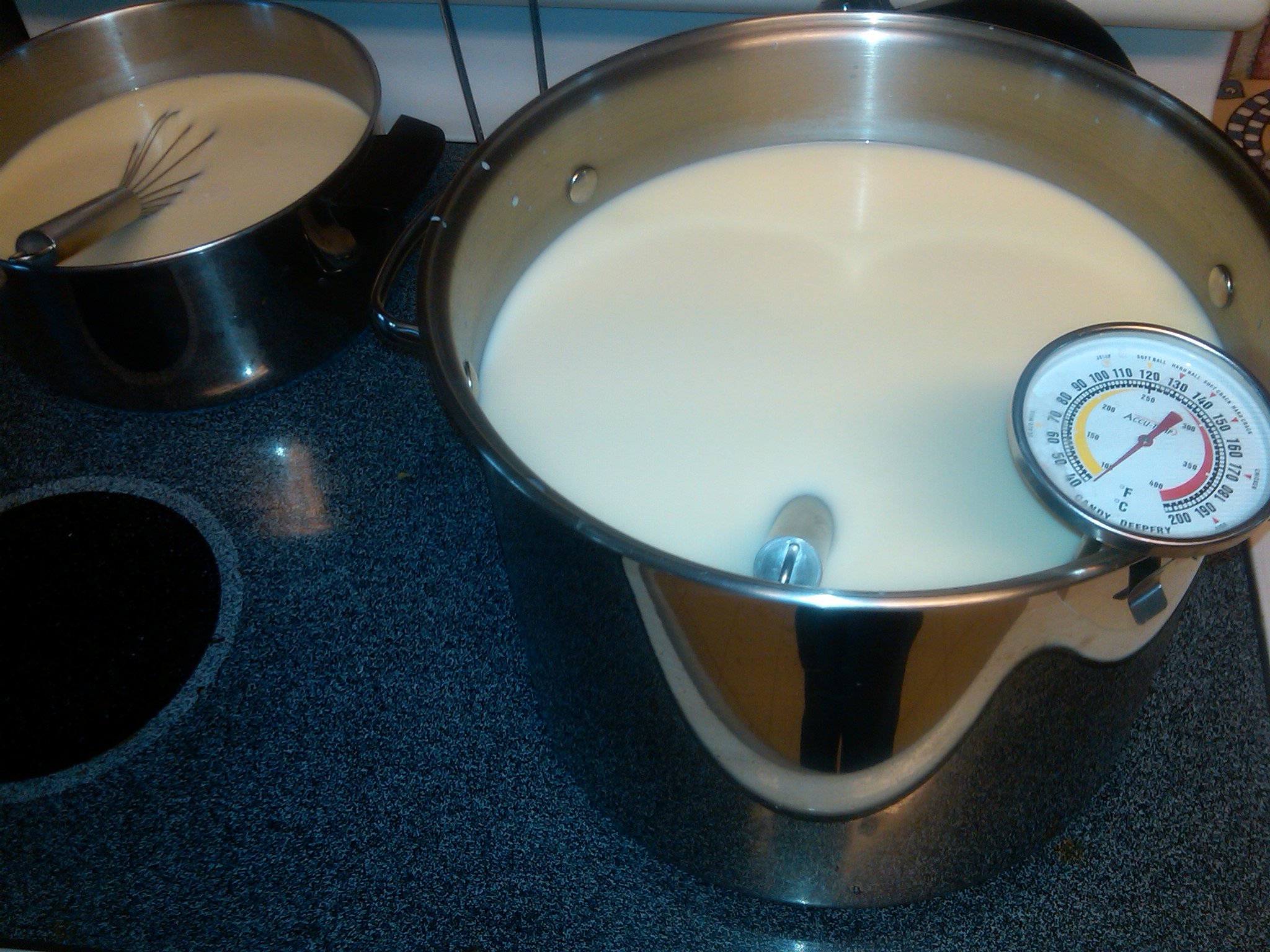
Heat milk to 180 degrees, whisking pretty steadily. Remove from heat.

If making plain yogurt, we cool milk to 110° either by allowing it to sit or by placing the pot in a sink of cold water.

Once it’s reached 110°, we whisk in 2T (overflowing, rounded T’s) of plain yogurt per quart.

Incubate at 110° for 8 hours.  We have an Excalibur Dehydrator, and WE LOVE IT!! (future post, I’m sure…)

If making vanilla yogurt, we add 1T (homemade) vanilla & 1/4c sorghum or honey or maple syrup when the pot comes off the burner. (It mixes in best when it’s warmer.)

Cool & complete same as with plain.

**My normal routine for plain yogurt as a “starter” is:  one week I will make a quart of plain yogurt using 1/2t Natren powder.  The next week, I’ll use that quart of plain as my “starter” for what I’m making.  (Always being sure to make at least 1 quart of plain for my “starter” for the following week.)  For 4 weeks, I use the plain yogurt from the week before as my “starter”.  The 5th week, I make a new plain yogurt using the Natren powder.  This way, my “starter” has not lost its “oomph”, and I haven’t had any problems with my yogurt not setting.  (And this helps our Natren powder to stretch a lot longer, lol!)

If we find we have a build-up of plain yogurt in the fridge, we just drain it & make some cream cheese

Homemade Cottage Cheese

We make/use/eat a lot of cottage cheese.  In order to make butter, we separate the skim milk from the cream.  Here’s a pic of our cream separator.  It’s from the 1950’s, and we bought it off ebay several years ago.  You can see, we pour whole milk in the stainless steel bowl and then the cream comes out of one spicket & the skim comes out the other one.

**IMPORTANT NOTE**  We DO NOT advocate drinking skim milk.  Here’s a link to a past post containing Weston A. Price Foundation links explaining the reason we drink whole, raw milk.  That being said, since skim is a byproduct of the butter-making process, if there are foods we can make from skim to keep our tummies full, we are all for it.  Other uses for our skim milk are as fertilizer for our pastures, ricotta cheese, and for growing more kefir grains.

We fill our 5 gallon bucket up w/ about 3.5 gallons of skim, seal the lid on it, and let it sit for several days in our cool basement.  This is to allow it to “sour” and form a solid curd.  This can be anywhere from 2-6 days…depending on the temperature/humidity of the weather.

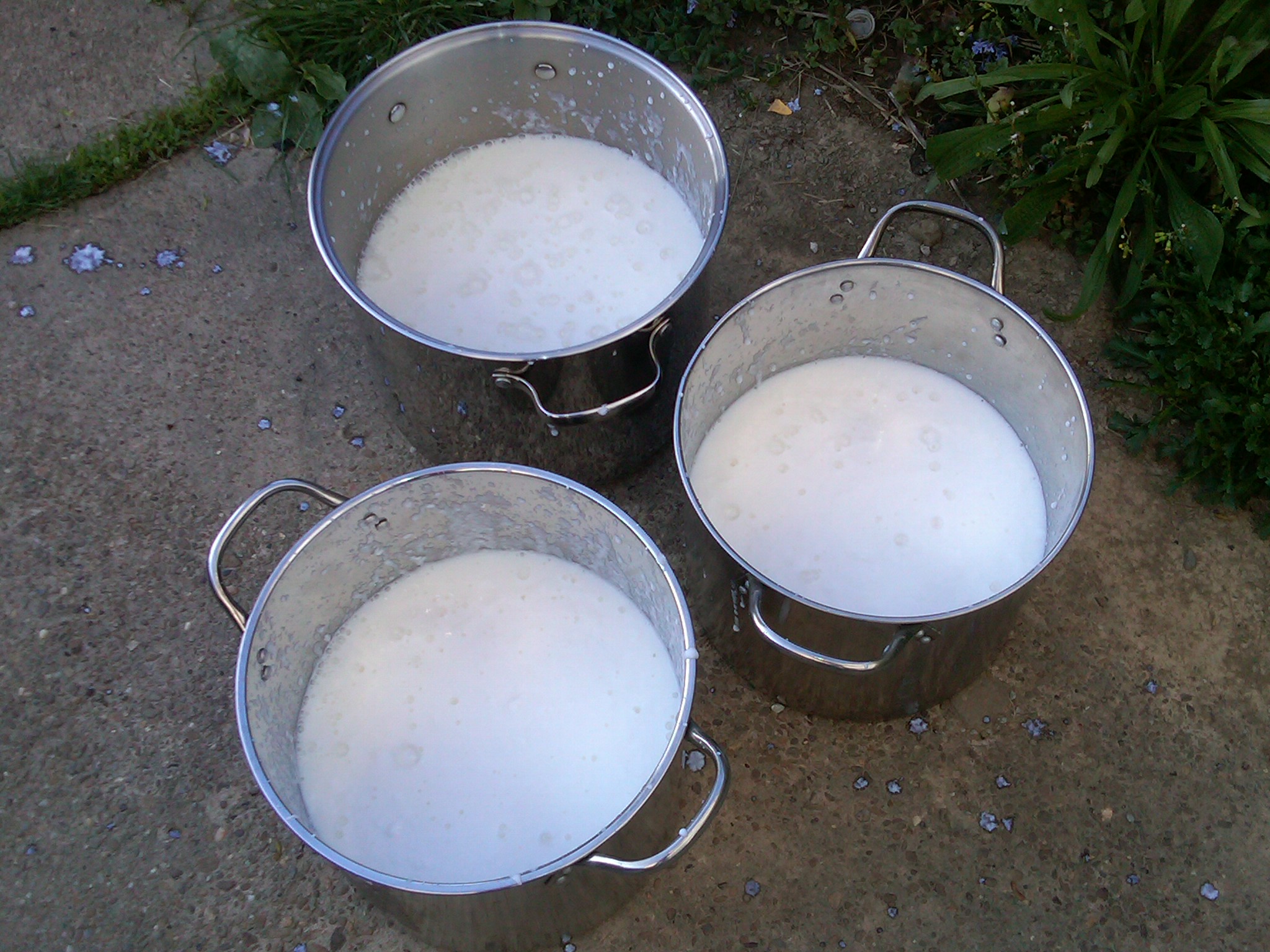
Once the milk has set, we pour it into several stock pots.  (I usually do this outside, because the clumpy consistency makes a lot of messy splashes.)

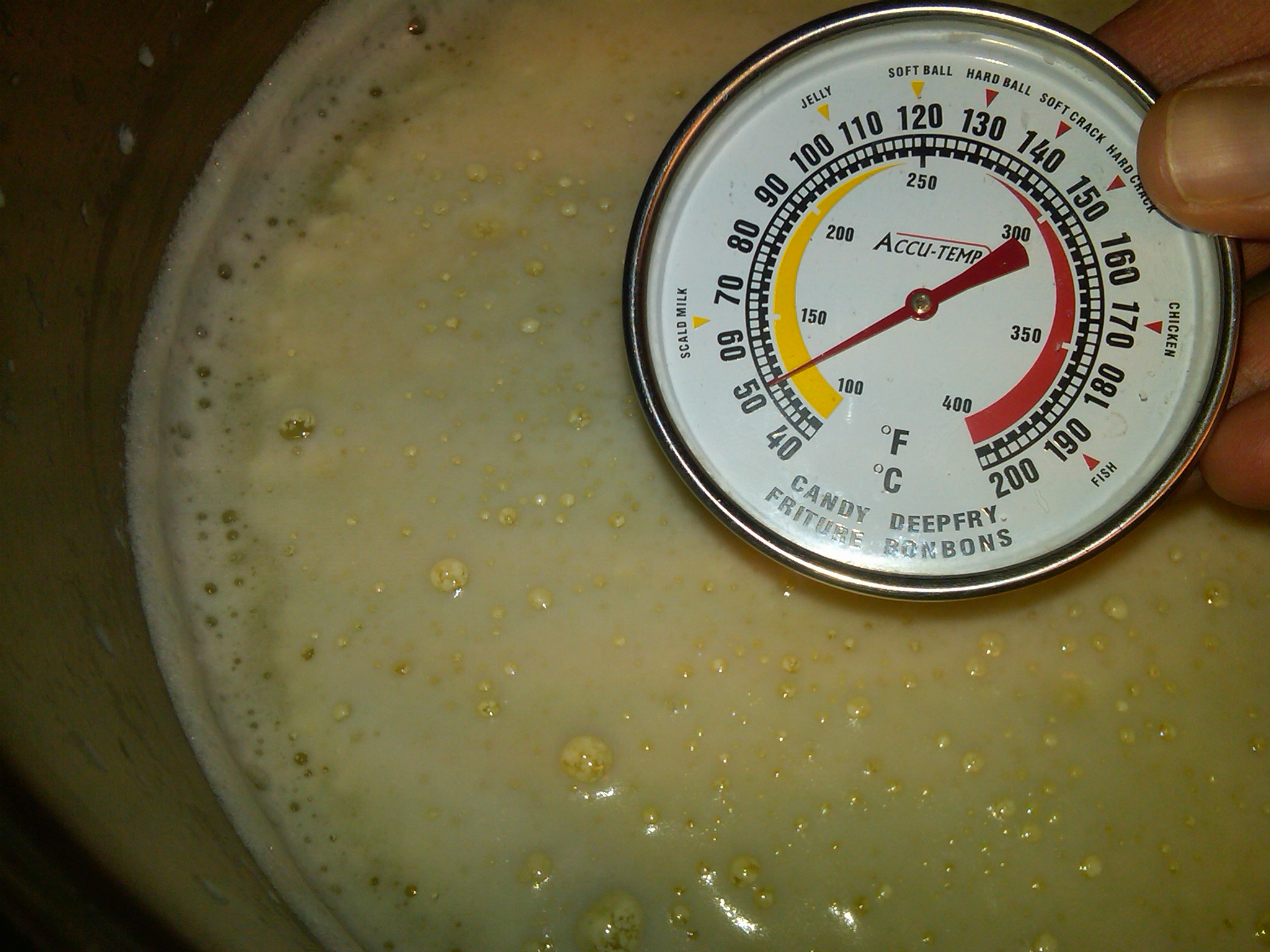
Then we heat the milk slowly to about 120°, stirring every-so-often.


You will see as it’s heating, the whey begins to distinctly separate from the curds.

Next we strain the curds through a muslin-lined metal strainer over a large bowl to catch the whey.


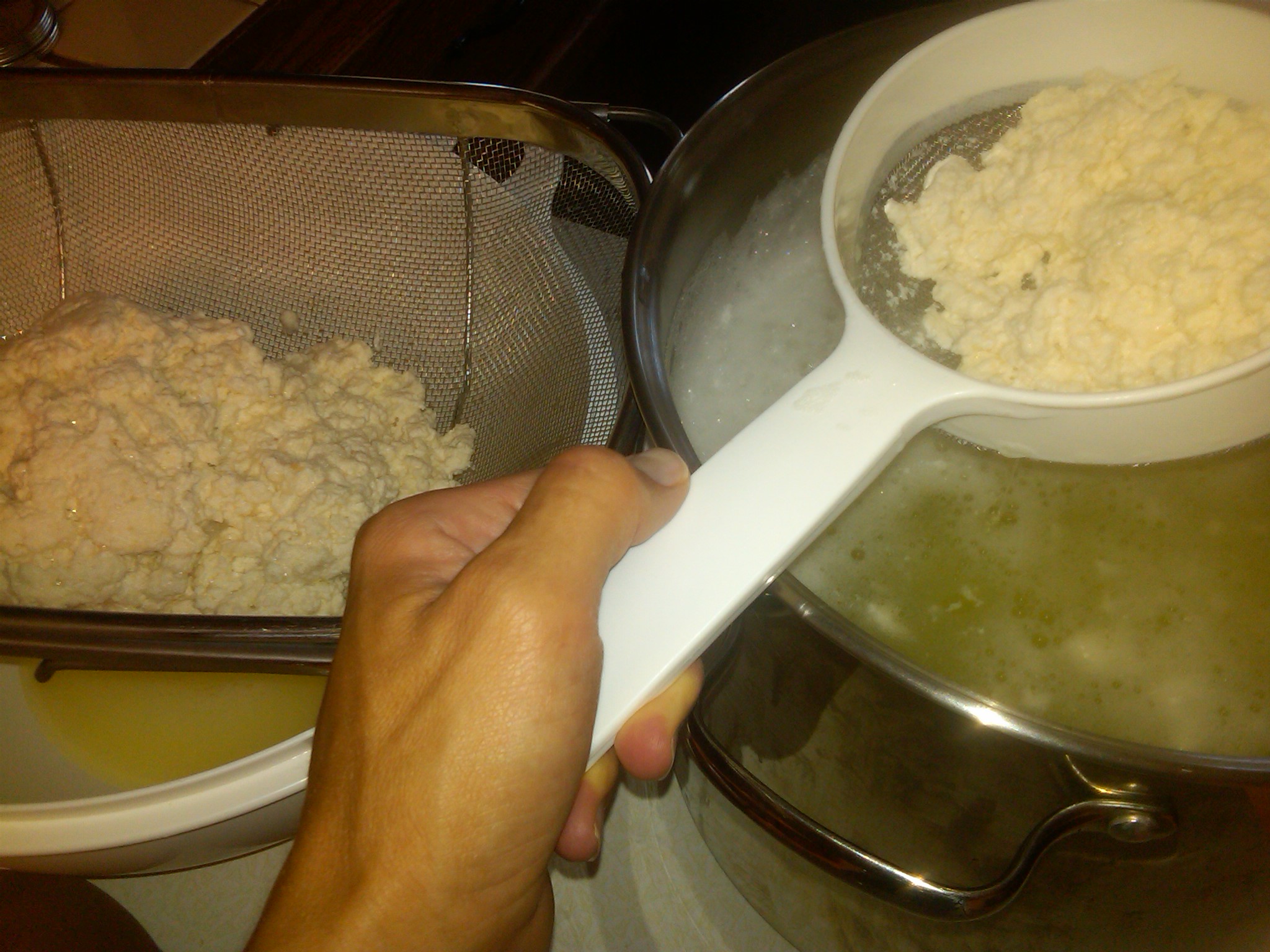
**UPDATED THIS POST 8-5-12** I no longer use the cheesecloth – found that it’s MUCH quicker to just take my hand-held strainer, dip it in the pot, scoop out the clumps of curds, and dump it in another colander with a bowl under it.  SAVES A TON OF TIME! 🙂

Here’s a pic of it:

That’s it!  What you have left is cottage cheese.  🙂

This recipe yielded 5 pounds 10.5 ounces of “dry” cottage cheese curds.  If I’m freezing the cottage cheese, I leave it “dry”, and add the cream/milk after thawing it.  We do add cream and/or whole milk in with the curds because we like more of a moist cottage cheese when we eat it fresh, but that is purely optional. For our family, we like to add the same weight in cream to the curds & mix it up.

We prefer to use 1/2 cottage cheese & 1/2 ricotta cheese when we make stuffed shells.  🙂

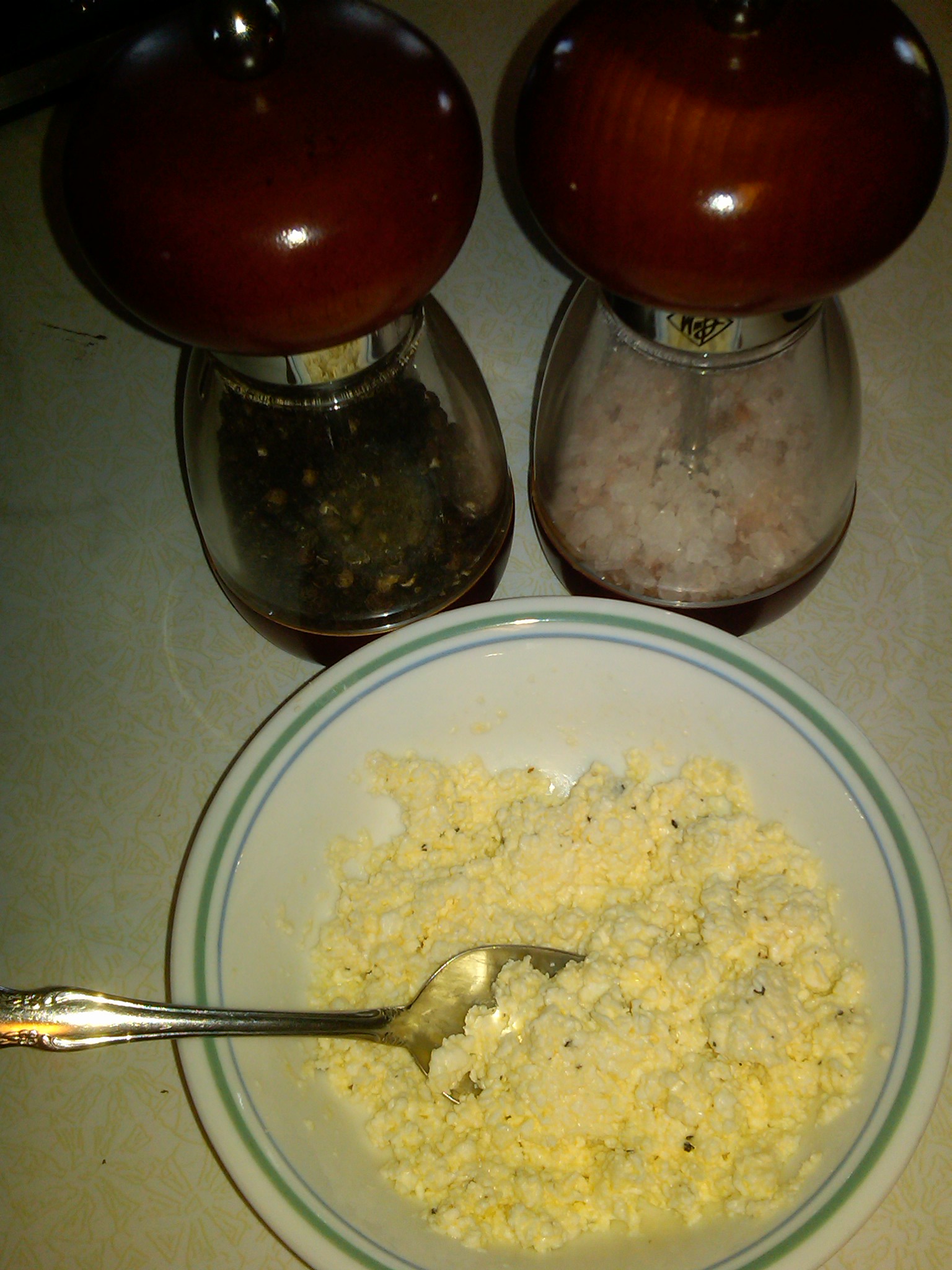
We usually store our cottage cheese plain, because half of us like to eat it w/ homemade jam mixed in, and the other half prefer to eat it with freshly ground sea salt and pepper.

Mmmmm! 🙂

Mmmm – soaked oats for breakfast tomorrow!

2c warm water + 4T whey + 2c regular organic oats (192g). Stir & cover overnight on countertop.

Tomorrow we’ll bring 2c water & 1t sea salt to a boil, stir in oat mixture, reduce heat to simmer w/ lid on saucepan for 3 minutes.

Then we stir in a big glob of raw butter, 1/2c (112g) evaporated cane juice, 1.5t sorghum, & a sprinkle of cinnamon. Also yummy w/ some of our cream poured over top of each bowl! 🙂